


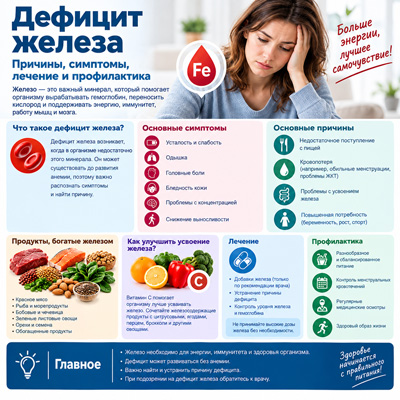
Iron Deficiency: Symptoms, Causes, Treatment and Prevention
Introduction
Iron deficiency occurs when the body does not have enough iron to meet its needs. Iron is an essential mineral that the body uses to make hemoglobin, the protein in red blood cells that carries oxygen from the lungs to tissues throughout the body. Iron is also involved in muscle function, cellular processes and the production of some hormones.
When iron stores become too low, the body may eventually develop iron-deficiency anemia. However, iron deficiency can exist before anemia develops, so recognizing possible symptoms and identifying the underlying cause is important.
What Is Iron Deficiency?
Iron deficiency develops when the body’s iron stores are depleted or when iron availability is insufficient.
The condition can progress through several stages:
- Low iron stores — the body’s stored iron begins to decrease.
- Iron-restricted blood cell production — there is not enough iron available for optimal red blood cell production.
- Iron-deficiency anemia — hemoglobin levels fall and the blood becomes less effective at carrying oxygen.
Not everyone with iron deficiency has anemia, and symptoms can vary depending on how severe the deficiency is and how quickly it develops.
Why Is Iron Important?
Iron has several important functions in the body.
It is needed for:
- Hemoglobin production
- Oxygen transport
- Normal muscle metabolism
- Energy-related processes
- Normal neurological development
- Cellular function
- Production of certain hormones
- Normal physical performance
When iron levels are too low, tissues may receive less oxygen, particularly once iron-deficiency anemia develops.
Common Symptoms of Iron Deficiency
Mild iron deficiency may cause few or no obvious symptoms.
As deficiency becomes more significant, symptoms may include:
- Tiredness
- Lack of energy
- Weakness
- Shortness of breath
- Headaches
- Pale skin
- Dizziness
- Noticeable heartbeats or palpitations
- Difficulty concentrating
- Reduced exercise tolerance
Other possible symptoms include hair loss, restless legs, changes in the nails, a sore tongue, unusual food cravings such as ice, and difficulty swallowing.
Because many of these symptoms can have other causes, symptoms alone cannot confirm iron deficiency.
What Causes Iron Deficiency?
Iron deficiency can develop for several different reasons.
Inadequate Iron Intake
A diet that consistently provides too little iron can contribute to deficiency.
This can occur when a person:
- Eats a very restricted diet
- Consumes little or no meat, seafood or poultry
- Has a poor overall diet
- Does not regularly consume iron-rich plant foods or fortified foods
People following vegetarian or vegan diets can obtain iron from plant foods, but non-heme iron from plants is generally absorbed less efficiently than heme iron from animal foods.
Blood Loss
Blood loss is an important cause of iron deficiency.
Possible sources include:
- Heavy menstrual bleeding
- Frequent blood donation
- Gastrointestinal bleeding
- Stomach ulcers
- Certain intestinal conditions
- Some medicines that can contribute to gastrointestinal bleeding
In men and in women after menopause, unexplained iron-deficiency anemia deserves medical evaluation because gastrointestinal blood loss can sometimes be responsible.
Problems Absorbing Iron
Even when enough iron is consumed, the body may not absorb it properly.
Potential causes include certain gastrointestinal disorders and conditions affecting digestion or nutrient absorption.
Some medicines can also affect iron absorption. For example, proton-pump inhibitors that reduce stomach acid may reduce absorption of non-heme iron in some circumstances.
Increased Requirements
Some stages of life increase the body’s need for iron.
These include:
- Pregnancy
- Infancy
- Childhood and adolescence
- Certain periods of increased physical demand
Pregnancy is associated with increased iron requirements because blood volume and red blood cell production increase.
Iron Deficiency and Anemia: What Is the Difference?
Iron deficiency means the body’s iron stores are too low.
Iron-deficiency anemia occurs when iron deficiency becomes severe enough to reduce hemoglobin and impair normal red blood cell production.
Therefore, it is possible to have low iron stores before anemia develops.
This distinction is important because treating the underlying iron deficiency early may help prevent progression to anemia.
How Is Iron Deficiency Diagnosed?
A healthcare professional may use blood tests to assess iron status.
Common tests can include:
- Complete blood count
- Hemoglobin
- Ferritin
- Transferrin saturation
- Other iron studies when appropriate
Ferritin is a useful indicator of stored iron, although inflammation and certain illnesses can affect ferritin levels. Healthcare professionals may therefore interpret ferritin together with other laboratory results and the person’s symptoms and medical history.
If iron-deficiency anemia is confirmed, the next important step is identifying why the deficiency developed.
Foods Rich in Iron
Iron is found in both animal and plant foods.
Heme Iron Sources
Heme iron is found in:
- Lean red meat
- Poultry
- Fish
- Seafood
This form of iron is generally more readily absorbed by the body.
Non-Heme Iron Sources
Plant and fortified sources include:
- Lentils
- Beans
- Peas
- Spinach
- Nuts
- Seeds
- Iron-fortified cereals
- Fortified breads
- Some dried fruits
Vitamin C can improve the absorption of non-heme iron. Eating foods such as citrus fruits, strawberries, peppers, tomatoes or broccoli together with plant sources of iron can therefore be helpful.
Iron and Vitamin C
Vitamin C can improve the absorption of non-heme iron.
For example, an iron-rich meal could combine:
- Lentils + tomatoes
- Beans + bell peppers
- Spinach + citrus fruit
- Fortified cereal + strawberries
This can be particularly useful for people who obtain most of their iron from plant foods.
Iron Supplements
Iron supplements can be used to treat confirmed iron deficiency or iron-deficiency anemia when recommended by a healthcare professional.
Different forms of iron are available, including:
- Ferrous sulfate
- Ferrous gluconate
- Ferric citrate
- Other iron preparations
The appropriate product and dose depend on the individual’s iron status, age, medical history and the cause of the deficiency.
Important: Don’t Take High-Dose Iron Without a Reason
Iron is an essential mineral, but more is not always better.
Excessive iron intake can cause adverse effects and, in some circumstances, serious toxicity. The adult upper intake level from all sources is generally 45 mg per day, although healthcare professionals may prescribe higher amounts temporarily when treating iron deficiency.
Therefore, high-dose iron should not be taken simply because of tiredness without determining whether iron deficiency is actually present.
Common Side Effects of Iron Supplements
Oral iron supplements can cause gastrointestinal side effects such as:
- Constipation
- Nausea
- Abdominal discomfort
- Diarrhea
- Dark-colored stools
If side effects are difficult to tolerate, speak with a doctor or pharmacist. They may recommend a different preparation, dosing schedule or treatment approach.
Iron and Medicines
Iron supplements can interact with certain medicines.
For example, iron can reduce the absorption or effectiveness of some medicines, including levothyroxine. It can also interact with certain medicines used for Parkinson’s disease. Calcium supplements may also interfere with iron absorption when taken together.
If you take prescription medicines, tell your doctor or pharmacist before starting an iron supplement.
Iron Deficiency in Men
Iron deficiency can occur in men, although the reasons should be carefully investigated.
Possible causes include:
- Inadequate dietary intake
- Gastrointestinal blood loss
- Digestive disorders
- Problems absorbing nutrients
- Frequent blood donation
- Certain chronic diseases
For a man with confirmed iron-deficiency anemia, simply taking iron may not be enough. The underlying cause of the deficiency should be identified.
Iron Deficiency and Exercise
Iron is involved in oxygen transport and muscle metabolism, so significant iron deficiency can affect physical performance.
Possible effects include:
- Reduced exercise tolerance
- Fatigue during physical activity
- Weakness
- Reduced endurance
- Difficulty recovering from activity
However, taking iron when iron status is already normal does not necessarily improve athletic performance. Iron supplementation should be based on an actual need rather than used routinely.
Iron Deficiency and Concentration
Iron deficiency can affect concentration and cognitive performance, particularly when it progresses to iron-deficiency anemia.
People may notice:
- Difficulty concentrating
- Reduced mental energy
- Problems with memory
- Lower productivity
These symptoms are not specific to iron deficiency, so persistent concentration problems should be evaluated rather than automatically attributed to low iron.
How Can Iron Deficiency Be Prevented?
A varied diet can help maintain adequate iron intake.
Useful habits include:
- Eat a variety of iron-rich foods
- Include legumes and leafy green vegetables
- Eat lean meat, fish or seafood if part of your diet
- Choose iron-fortified foods when appropriate
- Combine plant sources of iron with vitamin C-rich foods
- Avoid unnecessarily restrictive diets
- Discuss recurring blood loss with a healthcare professional
People with increased nutritional requirements or absorption problems may need individualized advice.
When Should You See a Doctor?
You should speak with a healthcare professional if you have persistent:
- Unexplained fatigue
- Weakness
- Shortness of breath
- Dizziness
- Palpitations
- Pale skin
- Reduced exercise tolerance
- Unusual cravings for non-food items
- Hair loss or other possible deficiency symptoms
A medical evaluation is particularly important when iron deficiency or anemia is suspected because the underlying cause needs to be identified.
Frequently Asked Questions
What is the main symptom of iron deficiency?
Fatigue and lack of energy are among the most common symptoms, but iron deficiency can also cause weakness, shortness of breath, headaches, paleness and difficulty concentrating.
Can iron deficiency occur without anemia?
Yes. Iron stores can become depleted before hemoglobin levels fall enough to meet the definition of anemia.
What foods are highest in iron?
Lean meat, seafood, poultry, beans, lentils, spinach, nuts, seeds and iron-fortified cereals are useful sources of iron.
Does vitamin C help iron absorption?
Yes. Vitamin C can improve the absorption of non-heme iron found in plant foods.
Should I take iron if I am tired?
Not automatically. Fatigue has many possible causes. It is better to determine whether iron deficiency is actually present before starting high-dose iron.
How long does it take to correct iron deficiency?
The time required varies according to the severity of the deficiency, the cause, the treatment used and how well the body absorbs iron. Follow-up blood tests may be used to monitor the response.
Can men have iron deficiency?
Yes. Iron deficiency can occur in men. When it is confirmed, especially when anemia is present, the underlying cause should be investigated.
Key Takeaways
- Iron is essential for hemoglobin production and oxygen transport.
- Iron deficiency can occur before iron-deficiency anemia develops.
- Common symptoms include fatigue, weakness, shortness of breath and difficulty concentrating.
- Blood loss, inadequate intake and poor absorption are important causes.
- Meat, seafood, legumes, leafy greens and fortified foods can provide iron.
- Vitamin C can improve absorption of plant-based iron.
- Iron supplements should generally be used when deficiency is confirmed or when recommended by a healthcare professional.
- Excessive iron can be harmful.
- Men with unexplained iron-deficiency anemia should receive medical evaluation to determine the cause.
Conclusion
Iron is an essential mineral for energy, oxygen transport, muscle function and overall health. When the body’s iron stores become too low, symptoms such as tiredness, weakness and reduced exercise tolerance can develop, and severe deficiency can lead to iron-deficiency anemia.
A balanced diet can provide iron for many people, but supplementation may be necessary when a deficiency is confirmed. Most importantly, treating iron deficiency should involve finding and addressing the reason the iron became low in the first place.
If you suspect iron deficiency, speak with a healthcare professional about appropriate blood tests before starting high-dose iron supplements.
https://pharmatoo.com/product-category/vitamins-and-minerals/
Tags
Iron Deficiency
Iron Deficiency Anemia
Low Iron
Iron Deficiency Symptoms
Iron Deficiency Causes
Iron Rich Foods
Iron Supplements
Iron and Vitamin C
Ferritin
Hemoglobin
Anemia
Iron for Men
Iron for Women
Iron and Energy
Iron and Immunity
Iron and Exercise
Healthy Nutrition
Vitamins and Minerals
Nutritional Deficiency
Healthy Diet
