


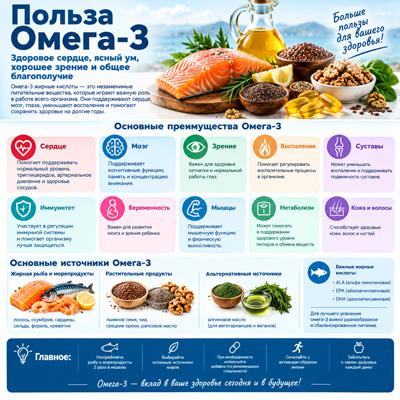
Omega-3 Benefits: Heart, Brain, Eyes, Inflammation and Overall Health
Introduction
Omega-3 fatty acids are essential polyunsaturated fats that play important roles throughout the body. They are found naturally in fatty fish, seafood, nuts, seeds and certain plant oils, and are also available in dietary supplements such as fish oil and algal oil.
The three main omega-3 fatty acids are ALA (alpha-linolenic acid), EPA (eicosapentaenoic acid) and DHA (docosahexaenoic acid). ALA is found mainly in plant foods, while EPA and DHA are abundant in fish and seafood. The body can convert some ALA into EPA and DHA, but the conversion is limited.
Omega-3s have been extensively studied for cardiovascular health, triglycerides, pregnancy, brain function, eye health and other areas. However, the strength of evidence differs depending on the specific health outcome and whether omega-3s come from food or supplements.
What Are Omega-3 Fatty Acids?
Omega-3 fatty acids are a group of fats that the body needs for normal biological functions.
The three most important forms are:
ALA
Alpha-linolenic acid (ALA) is found mainly in plant foods such as:
- flaxseeds;
- chia seeds;
- walnuts;
- rapeseed/canola oil;
- some other plant oils.
ALA is an essential fatty acid, meaning the body cannot produce it in sufficient amounts and must obtain it from food.
EPA
Eicosapentaenoic acid (EPA) is found primarily in fatty fish and seafood.
EPA participates in the production of signaling molecules involved in inflammation and other physiological processes.
DHA
Docosahexaenoic acid (DHA) is particularly important in the structure and function of cell membranes, including those in the brain and retina.
Fish, seafood and algae are important sources of DHA. Algal oil is also used as a vegetarian and vegan source of DHA and, in some products, EPA.
1. Omega-3 and Heart Health
One of the most extensively studied potential benefits of omega-3s is cardiovascular health.
Eating fish and seafood as part of a balanced diet is associated with cardiovascular benefits. The American Heart Association recommends including seafood in a healthy eating pattern, generally one to two servings per week.
Omega-3s may influence cardiovascular health through several mechanisms, including effects on:
- triglyceride levels;
- blood pressure;
- blood vessel function;
- heart rhythm;
- inflammatory processes.
However, taking an omega-3 supplement does not automatically prevent heart disease in otherwise healthy people. Clinical trials have produced mixed results regarding routine supplementation for prevention of cardiovascular events.
2. Omega-3 for High Triglycerides
One of the clearest established effects of high-dose omega-3 therapy is a reduction in triglyceride levels.
Prescription omega-3 medicines at a dose of approximately 4 g per day can substantially lower triglycerides in people with elevated levels. The American Heart Association notes that prescription omega-3 therapy can reduce triglycerides by approximately 20–30%.
This is different from simply taking a standard over-the-counter fish-oil supplement.
If your triglycerides are high, treatment should be based on medical evaluation rather than attempting to self-treat with large doses of fish oil.
3. Omega-3 and Brain Health
DHA is an important structural component of the brain.
Omega-3 fatty acids are therefore being studied for their potential effects on:
- cognitive function;
- brain development;
- memory;
- aging-related cognitive changes;
- neurological health.
Omega-3s are particularly important during periods of rapid brain development, including pregnancy and early childhood.
However, taking omega-3 supplements should not be presented as a proven way to prevent dementia or significantly improve memory in healthy adults. Research in this area remains mixed.
4. Omega-3 and Eye Health
DHA is also an important component of the retina.
Because of this, researchers have investigated omega-3s in relation to:
- retinal health;
- dry eyes;
- age-related eye conditions;
- visual development.
Although omega-3s have biological roles in the eye, clinical research has not established that supplements reliably prevent or treat every eye condition.
A balanced diet containing fish and other nutrient-rich foods remains an important part of overall eye health.
5. Omega-3 and Inflammation
EPA and DHA participate in biological pathways involved in inflammatory regulation.
This is one reason omega-3s have been studied in conditions associated with inflammation, including rheumatoid arthritis and other chronic conditions.
Some studies suggest that omega-3 supplementation may have beneficial effects on certain inflammatory symptoms, but the results depend on the condition, dose and type of omega-3 used.
Omega-3 supplements should therefore not be considered a replacement for prescribed treatment of inflammatory diseases.
6. Omega-3 and Joint Health
Omega-3 fatty acids have been investigated in people with rheumatoid arthritis and other joint problems.
Some research suggests that omega-3 supplementation may help reduce certain symptoms or the need for some pain medication in people with inflammatory arthritis.
However, omega-3 is not a cure for arthritis and should be considered part of an overall approach that may include prescribed medication, physical activity and weight management.
7. Omega-3 During Pregnancy
Omega-3 fatty acids, particularly DHA, are important for fetal development.
DHA contributes to the development of the:
- brain;
- nervous system;
- eyes.
Pregnancy increases nutritional requirements, so dietary choices become particularly important.
Pregnant women should discuss fish choices and supplements with their healthcare professional because some fish contain high levels of mercury. A supplement may also be appropriate in certain situations, but the product and dose should be selected carefully.
8. Omega-3 and Immune Function
Omega-3 fatty acids participate in biological processes involved in immune regulation.
However, claims that omega-3 supplements simply “boost immunity” are too broad.
A healthy immune system depends on many factors, including:
- adequate protein;
- vitamins and minerals;
- sleep;
- physical activity;
- healthy body weight;
- management of chronic diseases;
- overall dietary quality.
Omega-3s can be part of a healthy diet but should not be considered a standalone immune treatment.
9. Omega-3 and Blood Pressure
Research suggests that EPA and DHA can have modest effects on blood pressure in some circumstances.
The FDA has allowed certain qualified health claims concerning EPA and DHA and blood pressure, but specifically notes that the evidence is inconsistent and inconclusive.
Therefore, omega-3 supplements should not replace prescribed blood-pressure medication or established lifestyle measures.
10. Omega-3 and Metabolic Health
Omega-3s have also been studied in relation to:
- triglycerides;
- insulin sensitivity;
- metabolic syndrome;
- diabetes;
- body weight;
- liver fat.
The strongest and most consistent effect in this area is the reduction of triglycerides.
Omega-3 supplements should not be considered a weight-loss treatment or a cure for diabetes.
11. Food Sources of Omega-3
One of the simplest ways to increase omega-3 intake is through food.
Fatty fish
Good sources include:
- salmon;
- sardines;
- mackerel;
- herring;
- trout;
- anchovies.
The American Heart Association recommends seafood approximately twice per week as part of a heart-healthy eating pattern.
Plant sources
ALA can be obtained from:
- flaxseeds;
- chia seeds;
- walnuts;
- canola oil;
- certain other plant oils.
Algal sources
Algal oil is an option for people who avoid fish and provides DHA, with some products also containing EPA.
12. Fish Oil vs Omega-3 Supplements
Not all omega-3 supplements are identical.
Products can differ in:
- EPA content;
- DHA content;
- total omega-3 amount;
- chemical form;
- serving size;
- purity and quality.
The amount of EPA + DHA is often more informative than simply looking at the total amount of “fish oil” on the front of the package.
For example, a capsule labeled “1,000 mg fish oil” does not necessarily contain 1,000 mg of EPA and DHA.
Always check the Supplement Facts label.
13. Fish Oil vs Algal Oil
Fish oil is generally derived from oily fish and provides EPA, DHA or both.
Algal oil is produced from algae and is particularly useful for people following vegetarian or vegan diets.
Algal oil can provide DHA, and some formulations also contain EPA.
The best source depends on dietary preferences, nutritional requirements and individual circumstances.
14. Can Omega-3 Help With Cholesterol?
Omega-3s have a particularly important effect on triglycerides, but their effects on other cholesterol measurements are more variable.
Some high-dose EPA/DHA preparations can affect LDL cholesterol differently depending on the formulation and the individual’s baseline levels.
For this reason, omega-3 supplements should not be viewed as a general-purpose cholesterol treatment.
If cholesterol or triglycerides are elevated, a healthcare professional can determine whether diet, exercise, statins or prescription omega-3 medication may be appropriate.
15. How Much Omega-3 Do You Need?
There is no single daily dose of EPA and DHA that is appropriate for everyone.
Requirements depend on:
- age;
- pregnancy status;
- dietary intake;
- cardiovascular health;
- triglyceride levels;
- medications;
- medical conditions.
For healthy adults, obtaining omega-3s through a balanced diet that includes seafood is generally preferable to taking high-dose supplements.
For people with very high triglycerides, prescription omega-3 products at specific doses may be used under medical supervision.
16. Are Omega-3 Supplements Safe?
Omega-3 supplements are generally well tolerated at commonly used doses.
Possible side effects include:
- fishy aftertaste;
- bad breath;
- heartburn;
- nausea;
- stomach discomfort;
- diarrhea.
Higher doses require more caution.
Clinical studies have also reported an increased risk of atrial fibrillation with some high-dose omega-3 formulations in certain high-risk populations. The NIH notes that results have differed between formulations and trials.
17. Omega-3 and Blood-Thinning Medicines
People taking anticoagulants or antiplatelet medicines should discuss omega-3 supplementation with a healthcare professional, particularly when considering high doses.
Omega-3s can affect platelet function, and the overall medication and supplement combination should be considered.
Do not stop prescribed medication simply because you start taking fish oil.
18. Can You Get Enough Omega-3 From Food?
For many people, yes.
A varied diet containing fish, seafood, nuts and seeds can provide omega-3 fatty acids without requiring a supplement.
The American Heart Association emphasizes seafood as part of a healthy dietary pattern rather than relying on supplements for everyone.
People who do not eat fish may consider alternatives such as algal oil, depending on their dietary needs.
19. Who Might Consider an Omega-3 Supplement?
Supplementation may be discussed with a healthcare professional in situations such as:
- very low seafood intake;
- specific nutritional requirements;
- pregnancy-related nutritional planning;
- certain cardiovascular conditions;
- elevated triglycerides;
- vegetarian or vegan diets where DHA/EPA intake is limited.
However, the appropriate product and dose depend on the individual.
20. Omega-3 Supplements Are Not a Substitute for a Healthy Diet
Taking fish oil does not compensate for an otherwise poor diet.
A heart-healthy lifestyle also includes:
- vegetables and fruits;
- whole grains;
- legumes;
- adequate protein;
- healthy unsaturated fats;
- regular physical activity;
- maintaining a healthy weight;
- avoiding smoking;
- limiting excessive alcohol;
- adequate sleep.
Omega-3 should be viewed as one component of overall nutrition rather than a “magic” supplement.
Frequently Asked Questions
What are the main benefits of omega-3?
Omega-3 fatty acids are important for normal cell function and have been studied extensively for cardiovascular, brain, eye and inflammatory health. One of the clearest clinical effects of high-dose omega-3 therapy is lowering elevated triglycerides.
Is omega-3 good for the heart?
Eating fish and seafood as part of a healthy diet is associated with cardiovascular benefits. However, routine omega-3 supplementation does not consistently prevent cardiovascular disease in the general population.
How often should I eat fish?
The American Heart Association recommends approximately one to two servings of seafood per week as part of a healthy dietary pattern.
Is fish oil the same as omega-3?
No. Fish oil is a source of omega-3 fatty acids, but the actual amount of EPA and DHA can vary considerably between products.
Is omega-3 good for the brain?
DHA is an important structural component of the brain, but evidence that omega-3 supplements improve memory or prevent dementia in healthy adults is not conclusive.
Can omega-3 lower triglycerides?
Yes. High-dose prescription omega-3 therapy can significantly lower elevated triglyceride levels. Treatment should be medically supervised.
Can I take omega-3 every day?
Many people can safely consume omega-3s regularly, particularly through food. Supplement doses should be considered individually, especially if you take medication or have a cardiovascular condition.
Key Takeaways
- Omega-3 fatty acids include ALA, EPA and DHA.
- EPA and DHA are found mainly in fish and seafood.
- ALA is found primarily in plant foods such as flaxseeds, chia seeds and walnuts.
- Omega-3s are important for normal cell, brain and eye function.
- Eating fish regularly is associated with cardiovascular health benefits.
- High-dose prescription omega-3s can lower elevated triglycerides.
- Omega-3 supplements do not automatically prevent heart disease in healthy people.
- Algal oil can provide DHA and may be useful for people who do not eat fish.
- Check the amount of EPA and DHA, rather than only the total fish-oil quantity.
- High doses should be discussed with a healthcare professional.
- People taking blood-thinning medicines or with heart-rhythm problems should seek professional advice before using high-dose supplements.
Conclusion
For most people, a practical approach is to focus first on a balanced diet that includes omega-3-rich foods such as fatty fish, seafood, flaxseeds, chia seeds and walnuts.
Supplements can be useful in particular situations, but more is not necessarily better. High-dose omega-3 products should be used for specific reasons and, when appropriate, under medical supervision.
Omega-3 fatty acids are important nutrients that support normal health and have been extensively studied for cardiovascular, brain, eye and metabolic health.
https://pharmatoo.com/product-category/vitamins-and-minerals/
Tags
Omega-3 benefits
Omega-3 fatty acids
EPA
DHA
ALA
fish oil
omega-3 supplements
heart health
brain health
eye health
triglycerides
healthy fats
fish and seafood
inflammation
cardiovascular health
healthy diet
