


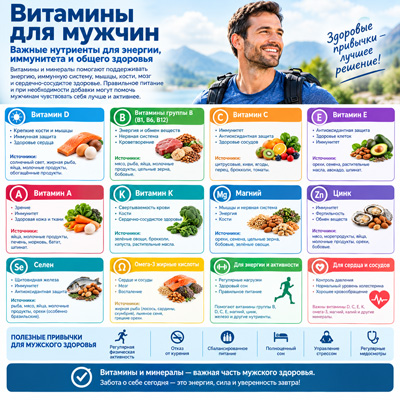
Vitamins for Men: Essential Nutrients for Energy, Immunity and Overall Health
Introduction
Vitamins and minerals play an important role in maintaining men’s health at every stage of life. They support energy production, immune function, muscle performance, bone strength, brain health, and normal metabolism.
A balanced diet should provide most of the vitamins and minerals the body needs. However, nutritional requirements can vary depending on age, diet, physical activity, lifestyle, and certain health conditions.
This guide explains the most important vitamins and minerals for men, where to get them from food, and when supplementation may be worth discussing with a healthcare professional.
Why Are Vitamins Important for Men?
Vitamins and minerals are involved in hundreds of processes throughout the body. For men, adequate nutrient intake can help support:
- Normal energy metabolism
- Immune system function
- Muscle and nerve function
- Healthy bones and teeth
- Brain and cognitive function
- Normal blood formation
- Cardiovascular health
- Healthy skin and hair
- Reproductive and sexual health
Vitamins do not replace a healthy lifestyle, but they are an important part of good nutrition.
Vitamin D
Vitamin D helps the body absorb calcium and is important for maintaining healthy bones and muscles. It also contributes to normal immune function.
Sources include:
- Sunlight exposure
- Fatty fish such as salmon and sardines
- Egg yolks
- Fortified foods
People who have limited sun exposure may be at greater risk of vitamin D deficiency.
Vitamin B12
Vitamin B12 is particularly important for the nervous system and normal red blood cell formation. It also contributes to normal energy metabolism.
Vitamin B12 is naturally found mainly in animal-derived foods, including:
- Meat
- Fish
- Eggs
- Milk and dairy products
People following a vegan diet may need fortified foods or a B12 supplement because plant foods do not naturally provide reliable amounts of vitamin B12.
Vitamin B6
Vitamin B6 contributes to normal protein and glycogen metabolism and supports the normal functioning of the nervous and immune systems.
Good sources include:
- Poultry
- Fish
- Potatoes
- Chickpeas
- Bananas
- Fortified cereals
A varied diet usually provides sufficient vitamin B6.
Vitamin C
Vitamin C is an antioxidant that contributes to normal immune function and helps protect cells from oxidative stress. It also supports collagen formation and improves iron absorption from plant foods.
Good sources include:
- Oranges and other citrus fruits
- Kiwi
- Strawberries
- Bell peppers
- Broccoli
- Tomatoes
Regular consumption of fruits and vegetables is generally the best way to obtain vitamin C.
Vitamin E
Vitamin E acts as an antioxidant and helps protect cells from oxidative stress.
Food sources include:
- Almonds
- Sunflower seeds
- Hazelnuts
- Vegetable oils
- Avocado
- Spinach
Vitamin E supplements are not automatically necessary for healthy men who eat a varied diet.
Vitamin A
Vitamin A is important for normal vision, immune function, and healthy skin and tissues.
Sources include:
- Eggs
- Dairy products
- Liver
- Carrots
- Sweet potatoes
- Spinach
- Other orange or dark-green vegetables
Because excessive preformed vitamin A can be harmful, high-dose supplements should not be taken routinely without professional advice.
Vitamin K
Vitamin K contributes to normal blood clotting and maintenance of healthy bones.
It can be found in:
- Leafy green vegetables
- Broccoli
- Cabbage
- Brussels sprouts
- Some vegetable oils
People taking anticoagulant medication should discuss major changes in vitamin K intake with their healthcare professional.
Magnesium
Magnesium is involved in normal muscle and nerve function, energy metabolism, and maintaining normal bones.
Good sources include:
- Nuts and seeds
- Whole grains
- Beans and legumes
- Leafy green vegetables
- Dark chocolate
Magnesium intake may be particularly important for people whose diets are low in whole grains, legumes, nuts, and vegetables.
Zinc
Zinc contributes to normal immune function, DNA synthesis, protein metabolism, and maintenance of normal fertility and reproductive health.
Food sources include:
- Meat
- Seafood
- Eggs
- Dairy products
- Beans
- Nuts and seeds
Although zinc is essential, taking very high doses for long periods can cause problems, including interfering with copper absorption.
Selenium
Selenium is an essential trace mineral that contributes to normal thyroid function and protects cells from oxidative stress. It also supports normal immune function.
Sources include:
- Fish and seafood
- Meat
- Eggs
- Dairy products
- Nuts, particularly Brazil nuts
The amount of selenium in foods can vary depending on the soil and other factors.
Omega-3 Fatty Acids
Omega-3 fatty acids are not vitamins, but they are important nutrients that can be part of a healthy diet.
Fatty fish such as salmon, sardines, mackerel, and trout are good sources of EPA and DHA.
For men who do not regularly eat fish, a healthcare professional can help determine whether an omega-3 supplement is appropriate.
Vitamins and Men’s Energy Levels
Feeling tired does not necessarily mean you need a multivitamin.
Fatigue can have many causes, including:
- Poor sleep
- Stress
- Lack of physical activity
- Dehydration
- An unbalanced diet
- Iron or vitamin B12 deficiency
- Thyroid problems
- Other medical conditions
If persistent fatigue is present, identifying the underlying cause is more useful than simply taking multiple supplements.
Vitamins for Muscle and Exercise
Men who exercise regularly need adequate protein, carbohydrates, fluids, vitamins, and minerals to support training and recovery.
Important nutrients include:
- Vitamin D
- B vitamins
- Magnesium
- Zinc
- Calcium
- Iron
However, taking larger amounts of vitamins does not automatically increase muscle growth or athletic performance. Nutrition, training, recovery, and sleep remain the foundation.
Vitamins for Men’s Reproductive Health
Several nutrients are involved in normal reproductive function, including zinc, selenium, vitamin D, folate, and vitamins C and E.
However, supplements should not be considered a guaranteed treatment for infertility, low testosterone, erectile dysfunction, or other reproductive problems.
If a man experiences persistent sexual or reproductive problems, medical evaluation is more appropriate than relying only on supplements.
Should Men Take a Multivitamin?
A multivitamin may be useful for some people when their diet does not consistently provide enough nutrients.
However, more is not always better.
Before taking a multivitamin, consider:
- Your usual diet
- Age
- Physical activity
- Dietary restrictions
- Existing health conditions
- Medicines you take
- Known nutritional deficiencies
A healthcare professional can help determine whether supplementation is appropriate.
When Might Men Need Extra Vitamins?
Supplementation may be considered when there is:
- A confirmed nutritional deficiency
- A restrictive diet
- Poor nutrient intake
- Limited sun exposure
- Certain digestive or absorption problems
- Increased nutritional requirements
- A healthcare professional’s recommendation
Blood tests may be appropriate when a deficiency is suspected.
Can You Get Enough Vitamins From Food?
For most healthy men, a varied and balanced diet can provide many essential nutrients.
A healthy eating pattern can include:
- Plenty of vegetables and fruit
- Whole grains
- Beans and legumes
- Nuts and seeds
- Fish
- Lean sources of protein
- Eggs and dairy or suitable alternatives
- Healthy unsaturated fats
Supplements are best viewed as a way to address specific nutritional needs rather than as a replacement for a healthy diet.
Important: Avoid Excessive Supplement Use
Taking several supplements at once can lead to excessive intake of certain nutrients.
High doses of some vitamins and minerals can cause adverse effects or interact with medicines.
Be especially careful with products marketed as “high potency,” “mega-dose,” or “maximum strength.”
Always check the total amount of each nutrient if you are taking more than one supplement.
Vitamins for Men by Age
Nutritional needs can change throughout life.
Younger Men
Focus on:
- Balanced nutrition
- Physical activity
- Adequate sleep
- Vitamin D
- B vitamins
- Magnesium
- Zinc
Middle-Aged Men
Maintaining cardiovascular and metabolic health becomes increasingly important. A nutrient-rich diet, healthy weight, regular exercise, and adequate sleep are key.
Older Men
Older adults may be more likely to have inadequate intake or absorption of certain nutrients, including vitamin B12 and vitamin D. Individual needs should be assessed rather than automatically taking high-dose supplements.
Frequently Asked Questions
What are the most important vitamins for men?
There is no single vitamin that is most important for every man. Vitamin D, B vitamins, vitamin C, vitamin A, vitamin E, and vitamin K all have important roles, while minerals such as magnesium, zinc, and selenium are also essential.
Do men need a daily multivitamin?
Not necessarily. Men who eat a varied diet may not need a multivitamin. Supplementation is more useful when dietary intake is inadequate or a specific deficiency has been identified.
Which vitamins are important for men’s energy?
B vitamins are involved in normal energy metabolism, but tiredness can have many causes. Persistent fatigue should be evaluated rather than treated automatically with supplements.
Are vitamins important for testosterone?
Adequate nutrition is important for normal hormone function, but taking vitamins does not automatically increase testosterone. Men with symptoms of low testosterone should speak with a healthcare professional.
Can vitamins improve sexual health?
Adequate nutrition supports general health and normal reproductive function, but vitamins are not a guaranteed treatment for erectile dysfunction or infertility.
Is it safe to take several vitamins together?
It depends on the doses and individual circumstances. Combining multiple products can unintentionally result in excessive intake of certain nutrients.
Key Takeaways
- A balanced diet is the foundation of good nutrition for men.
- Vitamin D, B vitamins, C, A, E, and K all have important biological roles.
- Magnesium, zinc, and selenium are also important minerals for men’s health.
- Vitamin B12 is especially important for people who consume little or no animal-derived food.
- Supplements are most useful when they address a specific nutritional need.
- High doses are not necessarily better and can sometimes be harmful.
- Persistent fatigue, sexual problems, or other symptoms should not automatically be treated with supplements.
- A healthcare professional can help identify deficiencies and choose appropriate supplementation.
Conclusion
The best vitamins for men are not necessarily the ones with the highest doses or the most ingredients. The goal is to provide the body with the nutrients it needs through a varied diet and use supplements when there is a genuine nutritional reason to do so.
Healthy eating, regular exercise, adequate sleep, stress management, and avoiding smoking are just as important as getting enough vitamins and minerals.
For men with specific health concerns, dietary restrictions, or suspected deficiencies, professional advice can help determine which nutrients and supplements are appropriate.
https://pharmatoo.com/product-category/vitamins-and-minerals/
Tags
Vitamins for Men
Men’s Health
Men’s Vitamins
Essential Vitamins for Men
Vitamin D for Men
Vitamin B12
Vitamin B6
Vitamin C
Vitamin E
Vitamin A
Vitamin K
Magnesium for Men
Zinc for Men
Selenium
Men’s Nutrition
Healthy Diet for Men
Men’s Wellness
Supplements for Men
Men’s Energy
Reproductive Health
Healthy Lifestyle
