


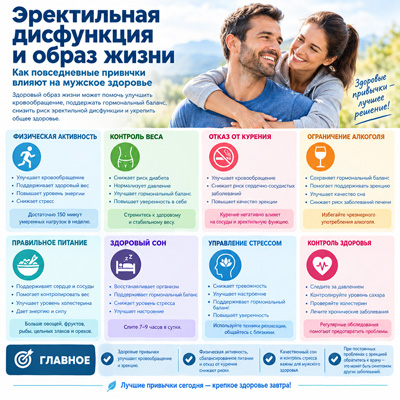
Erectile Dysfunction and Lifestyle: How Daily Habits Affect Sexual Health
Introduction
Erectile dysfunction (ED) is the difficulty of getting or maintaining an erection that is firm enough for satisfactory sexual activity. Although medicines can help manage ED, everyday habits also play an important role in erectile and overall cardiovascular health.
Blood circulation, physical activity, body weight, smoking, alcohol consumption, sleep, stress and diet can all influence sexual function. For some men, improving these areas may help reduce erectile problems and improve general health at the same time.
How Lifestyle Affects Erectile Function
An erection depends on healthy blood vessels, adequate blood flow, functioning nerves and appropriate hormonal and psychological factors.
Many of the same factors that increase the risk of cardiovascular disease can also contribute to ED. High blood pressure, diabetes, obesity, smoking and physical inactivity may affect blood vessels and circulation.
This means that lifestyle changes are not only about sexual performance — they can also support heart health and long-term wellbeing.
Exercise and Erectile Dysfunction
Regular physical activity can support cardiovascular health, circulation and healthy body weight.
Useful forms of exercise include:
- brisk walking;
- cycling;
- swimming;
- jogging;
- strength training;
- other moderate aerobic activities.
You do not need to begin with intense workouts. Starting with regular walking and gradually increasing activity can be a practical approach.
How Much Exercise Is Helpful?
A reasonable goal for many adults is regular moderate-intensity physical activity throughout the week, combined with muscle-strengthening activities.
If you have a chronic medical condition or have been inactive for a long time, speak with a healthcare professional before starting a demanding exercise programme.
Maintaining a Healthy Weight
Being overweight or obese can be associated with a higher risk of erectile dysfunction.
Excess body weight may contribute to:
- high blood pressure;
- type 2 diabetes;
- abnormal cholesterol levels;
- cardiovascular disease;
- hormonal changes;
- reduced physical fitness.
Gradual, sustainable weight loss when appropriate may improve several of these risk factors.
The goal should not be rapid weight loss, but rather a healthy and maintainable lifestyle.
Smoking and Erectile Dysfunction
Smoking can damage blood vessels and reduce healthy blood flow, which is important for normal erections.
Smoking is also a major risk factor for cardiovascular disease.
Quitting smoking can therefore benefit both sexual and general health.
If quitting is difficult, professional support, behavioural strategies and approved smoking-cessation treatments can improve the chances of success.
Alcohol and Erectile Function
Excessive alcohol consumption can interfere with sexual function.
Alcohol may:
- make it more difficult to achieve an erection;
- affect sexual desire and performance;
- interfere with sleep;
- contribute to high blood pressure;
- affect overall health when consumed excessively.
Reducing alcohol consumption or avoiding excessive drinking may therefore be beneficial for sexual health.
Healthy Diet and Erectile Dysfunction
A balanced diet can support cardiovascular health and healthy blood vessels.
A healthy eating pattern can include:
- vegetables;
- fruits;
- whole grains;
- beans and legumes;
- nuts and seeds;
- fish;
- lean sources of protein;
- healthy unsaturated fats.
It is also useful to limit excessive amounts of:
- highly processed foods;
- added sugars;
- saturated fats;
- highly salty foods;
- excess calories.
There is no single food that can guarantee an improvement in erections. Overall dietary habits matter more than individual “sexual health” foods.
Sleep and Erectile Function
Poor sleep can affect energy, mood, stress levels and overall health.
Some sleep disorders, particularly sleep apnoea, are also associated with sexual and erectile problems.
Helpful sleep habits include:
- maintaining a regular sleep schedule;
- creating a comfortable, dark sleeping environment;
- limiting excessive alcohol;
- reducing screen use before bedtime;
- addressing persistent sleep problems with a healthcare professional.
If you regularly snore loudly, stop breathing during sleep or feel extremely tired during the day, discuss these symptoms with a doctor.
Stress and Erectile Dysfunction
Psychological factors can contribute to ED or make existing erectile problems worse.
Stress, anxiety, relationship difficulties and performance anxiety can interfere with sexual arousal and the ability to maintain an erection.
Strategies that may help include:
- regular exercise;
- relaxation techniques;
- adequate sleep;
- reducing excessive alcohol consumption;
- talking openly with a partner;
- counselling or sex therapy when appropriate.
ED does not always have a purely physical or purely psychological cause. Both factors can sometimes contribute.
Managing Blood Pressure, Blood Sugar and Cholesterol
Good control of cardiovascular and metabolic health is important for erectile function.
Conditions such as:
- high blood pressure;
- diabetes;
- high cholesterol;
- cardiovascular disease;
can damage blood vessels and contribute to ED.
Regular medical check-ups can help identify and manage these problems.
If you already take medication for these conditions, do not stop or change it because of erectile difficulties without speaking with your doctor.
Erectile Dysfunction and Medicines
Some medicines can contribute to erectile difficulties.
These may include certain medicines used for:
- high blood pressure;
- depression;
- anxiety;
- prostate conditions;
- other chronic health conditions.
However, a medicine that may contribute to ED can still be medically important.
Never stop prescribed medication on your own. If you suspect a medicine is affecting sexual function, discuss possible alternatives or dose adjustments with your healthcare professional.
Pelvic Floor Exercises
The pelvic floor muscles are involved in urinary control and sexual function.
Some men may benefit from pelvic floor muscle exercises, sometimes called Kegel exercises.
A healthcare professional or physiotherapist can help identify the correct muscles and teach an appropriate exercise programme.
Consistent practice is generally more important than doing a large number of exercises occasionally.
Does Lifestyle Change Cure Erectile Dysfunction?
Lifestyle changes can help, but they do not guarantee that ED will completely disappear.
The effect depends on the underlying cause.
If ED is primarily related to smoking, obesity, inactivity, excessive alcohol consumption or poor cardiovascular health, lifestyle improvements may have a meaningful effect.
However, ED can also be associated with diabetes, vascular disease, neurological conditions, hormonal problems, medications or psychological factors. These may require additional treatment.
Lifestyle Changes and ED Medicines
Some men may need medication such as sildenafil or another PDE5 inhibitor in addition to lifestyle changes.
Lifestyle improvements and medical treatment are not necessarily alternatives. They can sometimes be used together as part of an overall treatment plan.
If you are taking medication for ED, follow the prescribed instructions and tell your healthcare professional about other medicines you use.
Sildenafil and other PDE5 inhibitors must not be combined with nitrate medicines because the combination can cause a dangerous fall in blood pressure.
When Should You See a Doctor?
You should consider speaking with a healthcare professional if:
- erectile problems happen repeatedly;
- ED is getting worse;
- you have diabetes or high blood pressure;
- you have high cholesterol;
- you smoke;
- you have cardiovascular disease;
- you take medicines that may affect sexual function;
- you have low sexual desire or other sexual symptoms;
- lifestyle changes do not improve the problem.
Persistent ED can sometimes be an early sign of cardiovascular or metabolic disease, so it should not always be treated simply as a sexual problem.
A Practical Lifestyle Plan for Better Sexual Health
Small, consistent changes are often easier to maintain than major changes made all at once.
Step 1: Move More
Start with regular walking and gradually increase physical activity.
Step 2: Stop Smoking
If you smoke, make a plan to quit and seek professional support if needed.
Step 3: Improve Your Diet
Increase vegetables, fruits, whole grains, legumes, nuts and other nutrient-rich foods while reducing highly processed foods.
Step 4: Maintain a Healthy Weight
If you are overweight, aim for gradual and sustainable weight management.
Step 5: Limit Alcohol
Avoid excessive drinking and consider reducing your overall alcohol intake.
Step 6: Sleep Better
Aim for a regular sleep schedule and address persistent sleep problems.
Step 7: Manage Stress
Exercise, relaxation, counselling and healthy social connections can all help manage chronic stress.
Step 8: Have Regular Health Checks
Monitor blood pressure, blood sugar and cholesterol, especially if you have risk factors for cardiovascular disease.
Frequently Asked Questions
Can exercise improve erectile dysfunction?
Regular physical activity can support cardiovascular health, circulation and healthy body weight, which may benefit erectile function in some men.
Can losing weight help with ED?
If excess weight contributes to metabolic or cardiovascular problems, gradual weight loss may improve some of the factors associated with ED.
Does quitting smoking improve erections?
Quitting smoking can improve cardiovascular and vascular health and may benefit erectile function.
Does alcohol cause erectile dysfunction?
Heavy alcohol consumption can interfere with erections and may contribute to other health problems associated with ED.
Can stress cause erectile dysfunction?
Yes. Stress, anxiety and performance anxiety can contribute to difficulty achieving or maintaining an erection.
Is erectile dysfunction always caused by lifestyle?
No. ED can have many causes, including cardiovascular disease, diabetes, hormonal or neurological conditions, medications and psychological factors.
Can lifestyle changes replace ED medication?
Sometimes lifestyle improvements may significantly help, but not everyone will respond sufficiently to lifestyle changes alone. Treatment depends on the underlying cause.
Key Takeaways
- Healthy lifestyle habits can support erectile and cardiovascular health.
- Regular physical activity can improve fitness and circulation.
- Maintaining a healthy weight may reduce several ED risk factors.
- Smoking can damage blood vessels and contribute to erectile problems.
- Excessive alcohol can interfere with sexual function.
- A balanced diet supports overall vascular health.
- Good sleep and stress management are important for sexual wellbeing.
- Diabetes, high blood pressure and high cholesterol should be properly managed.
- Some medicines can contribute to ED, but prescribed treatment should never be stopped without medical advice.
- Persistent erectile dysfunction deserves medical evaluation because it can sometimes be associated with other health conditions.
Conclusion
Erectile dysfunction and lifestyle are closely connected. Healthy daily habits can support blood vessel function, cardiovascular health, energy and overall sexual wellbeing.
Regular exercise, maintaining a healthy weight, quitting smoking, limiting alcohol, eating a balanced diet, getting enough sleep and managing stress can all be valuable parts of an ED management plan.
However, lifestyle changes are not a substitute for medical evaluation when erectile problems are persistent or severe. Identifying and treating the underlying cause can be an important step toward better sexual and overall health.
Better lifestyle habits can support better health — including sexual health.
https://pharmatoo.com/product-category/sexual-health/erectile-dysfunction/
Tags
erectile dysfunction and lifestyle
erectile dysfunction
ED
ED lifestyle
lifestyle and erectile dysfunction
erectile dysfunction prevention
erectile dysfunction treatment
ED treatment
men’s health
male sexual health
sexual health
sexual wellness
erectile function
erection problems
healthy lifestyle
healthy habits
exercise and ED
exercise for erectile dysfunction
weight loss and ED
smoking and erectile dysfunction
quitting smoking
alcohol and erectile dysfunction
diet and erectile dysfunction
healthy diet
sleep and erectile dysfunction
stress and erectile dysfunction
stress management
cardiovascular health
heart health
blood circulation
blood flow and erections
high blood pressure and ED
diabetes and ED
cholesterol and ED
obesity and ED
pelvic floor exercises
Kegel exercises
male wellness
sexual health advice
ED prevention
natural ways to support erectile health
