


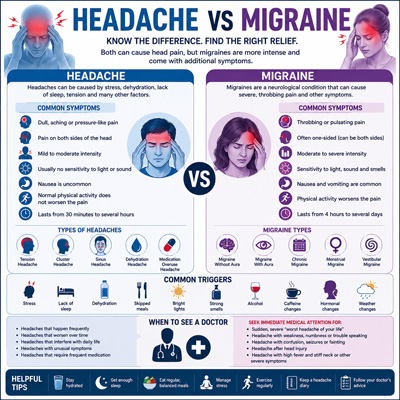
Headache vs Migraine: What’s the Difference?
Introduction
Headaches are one of the most common health complaints. They can range from mild discomfort to severe pain and may occur for many different reasons.
A migraine is a specific neurological condition that can cause moderate to severe headache, often together with other symptoms such as nausea and increased sensitivity to light or sound.
Although people often use the words “headache” and “migraine” interchangeably, they are not the same thing.
This guide explains the main differences between common headaches and migraines, their symptoms, possible triggers and when medical advice may be appropriate.
What Is a Headache?
A headache is pain or discomfort in the head, scalp or upper neck.
There are many different types of headaches. One of the most common is a tension-type headache.
Tension headaches often cause:
- mild to moderate pain;
- pressure or tightness around the head;
- pain on both sides of the head;
- discomfort around the forehead or temples;
- tenderness in the scalp, neck or shoulders.
Tension headaches usually do not cause severe nausea or major sensitivity to light and sound.
What Is a Migraine?
A migraine is a neurological condition characterized by recurring attacks that can include headache and other symptoms.
Migraine pain is often:
- moderate to severe;
- throbbing or pulsating;
- felt on one side of the head, although it can affect both sides;
- aggravated by routine physical activity.
A migraine attack can last for several hours and, in some cases, up to several days.
Migraine can occur with or without an aura.
What Is a Migraine Aura?
An aura is a group of temporary neurological symptoms that can occur before or during a migraine attack.
Possible aura symptoms include:
- flashing lights;
- zigzag lines;
- blind spots;
- visual disturbances;
- tingling or numbness;
- difficulty speaking.
Aura symptoms usually develop gradually and are temporary.
Not everyone with migraine experiences an aura.
Headache vs Migraine: Main Differences
| Feature | Common/Tension Headache | Migraine |
|---|---|---|
| Pain intensity | Usually mild to moderate | Often moderate to severe |
| Pain sensation | Pressure or tightness | Often throbbing or pulsating |
| Location | Frequently both sides | Often one side, but can be both |
| Physical activity | Usually does not significantly worsen pain | Can make pain worse |
| Nausea | Uncommon | Common |
| Vomiting | Uncommon | May occur |
| Light sensitivity | Usually mild or absent | Common |
| Sound sensitivity | Usually mild or absent | Common |
| Aura | No | May occur |
| Duration | Often several hours | Several hours to several days |
Symptoms can vary significantly from person to person, so not every migraine or headache follows the same pattern.
Common Symptoms of a Headache
Depending on the type of headache, symptoms may include:
- pressure in the head;
- tightness;
- mild or moderate pain;
- pain around the forehead;
- pain around the temples;
- neck discomfort;
- scalp tenderness;
- tiredness.
Headaches can occur occasionally or become recurrent.
Common Symptoms of Migraine
Migraine attacks may involve:
- moderate or severe headache;
- throbbing or pulsating pain;
- nausea;
- vomiting;
- sensitivity to light;
- sensitivity to sound;
- sensitivity to smells;
- visual disturbances;
- dizziness;
- difficulty concentrating;
- fatigue.
Some people experience symptoms before the headache begins, such as changes in mood, food cravings or unusual tiredness.
Common Headache Triggers
Headaches can have many possible triggers.
Common factors include:
- stress;
- lack of sleep;
- dehydration;
- skipping meals;
- prolonged screen use;
- eye strain;
- muscle tension;
- poor posture;
- alcohol;
- changes in routine.
Identifying individual triggers can sometimes help reduce the frequency of headaches.
Common Migraine Triggers
Migraine triggers vary from person to person.
Possible triggers include:
- stress;
- changes in sleep;
- skipping meals;
- dehydration;
- hormonal changes;
- bright or flashing lights;
- strong smells;
- certain foods;
- alcohol;
- changes in weather;
- excessive caffeine or sudden changes in caffeine consumption.
Keeping a headache diary can help identify patterns and potential triggers.
How Are Headaches and Migraines Diagnosed?
Most headaches and migraines are diagnosed based on:
- symptoms;
- medical history;
- frequency and duration of attacks;
- headache characteristics;
- associated symptoms;
- physical and neurological examination when appropriate.
There is no single test that confirms every migraine.
Additional tests may sometimes be required when symptoms are unusual or when a healthcare professional needs to rule out another cause.
Treatment for Headaches
Treatment depends on the type and cause of the headache.
For occasional tension-type headaches, helpful measures may include:
- adequate hydration;
- regular meals;
- sufficient sleep;
- rest;
- relaxation techniques;
- reducing eye strain;
- gentle stretching;
- improving posture.
Some people may use over-the-counter pain medicines when appropriate.
Always follow the recommended dosage and avoid using pain medicines too frequently, as frequent use can contribute to medication-overuse headaches.
Treatment for Migraine
Migraine treatment can involve two main approaches:
Treating an Attack
Depending on the individual situation, treatment may include:
- rest in a quiet, dark room;
- adequate fluids;
- over-the-counter pain medicines;
- migraine-specific medicines prescribed by a healthcare professional;
- medicines for nausea when appropriate.
Treatment is generally most effective when started early during an attack.
Preventing Migraine Attacks
People who experience frequent or disabling migraines may benefit from preventive treatment.
Preventive strategies can include:
- maintaining a regular sleep schedule;
- eating regular meals;
- staying hydrated;
- exercising regularly;
- identifying and avoiding personal triggers;
- managing stress;
- prescribed preventive medication when appropriate.
A healthcare professional can help determine the most suitable treatment plan.
Can Headaches Be Prevented?
Some headaches can be reduced by maintaining healthy daily habits.
Helpful strategies include:
- getting enough sleep;
- drinking enough water;
- eating regular meals;
- taking breaks from screens;
- maintaining good posture;
- managing stress;
- exercising regularly;
- limiting known personal triggers.
If headaches occur frequently, keeping a record of when they happen and what symptoms accompany them can be useful.
When Should You See a Doctor?
Medical advice is recommended if headaches:
- happen frequently;
- become progressively more severe;
- interfere with everyday activities;
- suddenly change in pattern;
- require frequent pain medication;
- are accompanied by unusual neurological symptoms;
- repeatedly cause vomiting;
- begin for the first time later in life.
A healthcare professional can help determine the cause and recommend appropriate treatment.
When Is a Headache an Emergency?
Seek urgent medical attention for a sudden, extremely severe headache, especially if it reaches maximum intensity very quickly.
Emergency assessment is also important when a severe headache occurs with symptoms such as:
- weakness or numbness;
- difficulty speaking;
- confusion;
- fainting;
- seizures;
- severe vision problems;
- high fever with a stiff neck;
- a significant head injury;
- severe or rapidly worsening symptoms.
These symptoms can sometimes indicate a serious medical condition and should not be ignored.
Frequently Asked Questions
Is a migraine just a severe headache?
No. Migraine is a neurological condition that can cause headache as well as nausea, sensitivity to light and sound, visual symptoms and other neurological symptoms.
How can I tell if I have a migraine?
A migraine is often characterized by moderate to severe headache, frequently with nausea or increased sensitivity to light and sound. A healthcare professional can help confirm the diagnosis.
Can a migraine affect both sides of the head?
Yes. Although migraine pain is often one-sided, it can affect both sides of the head.
How long does a migraine last?
A migraine attack can last from several hours to several days.
Can stress cause headaches?
Yes. Stress is a common trigger for several types of headaches and can also trigger migraine attacks.
Can dehydration cause headaches?
Yes. Not drinking enough fluids can contribute to headaches in some people.
Should I keep a headache diary?
A headache diary can be useful for identifying patterns, triggers, duration, symptoms and medication use.
Key Takeaways
- A headache is a symptom, while migraine is a specific neurological condition.
- Tension headaches commonly cause pressure or tightness and are often mild to moderate.
- Migraines are often more severe and may cause throbbing pain, nausea and sensitivity to light or sound.
- Some people experience a migraine aura with temporary visual or sensory symptoms.
- Stress, dehydration, lack of sleep and skipped meals can contribute to headaches or migraines.
- Healthy sleep, regular meals, hydration and stress management may help reduce attacks.
- Frequent or severe headaches should be discussed with a healthcare professional.
- A sudden, extremely severe headache or a headache accompanied by neurological symptoms requires urgent medical evaluation.
Explore our Health & Wellness section on our website to learn more about headaches, migraines, everyday health and ways to support your wellbeing.
https://pharmatoo.com/product-category/pharmacy/painkillers/headache-migraine/
Tags
- headache
- migraine
- headache vs migraine
- migraine vs headache
- headache symptoms
- migraine symptoms
- migraine aura
- tension headache
- headache causes
- migraine causes
- headache treatment
- migraine treatment
- migraine prevention
- headache prevention
- throbbing headache
- severe headache
- tension headache symptoms
- migraine triggers
- headache triggers
- headache relief
- migraine relief
- neurological health
- nervous system
- nausea and migraine
- headache and stress
- dehydration headache
- health and wellness
- healthy lifestyle
- pain management
- headache diary
- migraine attacks
