


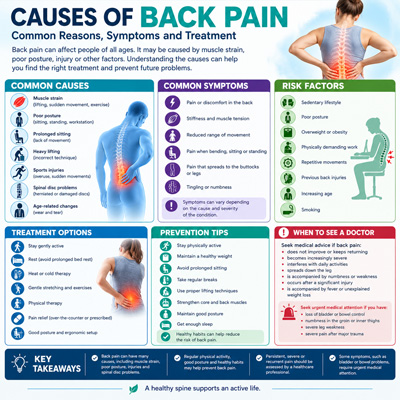
Causes of Back Pain: Common Reasons, Symptoms and Treatment
Introduction
Back pain is one of the most common health complaints and can affect people of all ages. It may develop suddenly after an injury or appear gradually as a result of muscle tension, poor posture, physical strain or other factors.
In many cases, back pain improves with time and appropriate self-care. However, persistent or severe pain may require medical evaluation.
This guide explains the most common causes of back pain, associated symptoms, risk factors, treatment options and when you should seek medical attention.
What Is Back Pain?
Back pain refers to discomfort or pain anywhere in the back, although it most commonly affects the lower back.
Back pain may be:
- acute, lasting for a short period;
- subacute, lasting several weeks;
- chronic, continuing for a longer period;
- mild, moderate or severe;
- constant or intermittent.
The location and character of the pain can provide useful information about its possible cause.
Common Causes of Back Pain
Back pain can have many different causes.
Common causes include:
- muscle strain;
- ligament strain;
- poor posture;
- prolonged sitting;
- heavy lifting;
- sudden movements;
- lack of physical activity;
- sports injuries;
- problems involving the spinal discs;
- age-related changes in the spine.
Sometimes no specific cause can be identified. This does not necessarily mean that the pain is caused by a serious condition.
Muscle Strain
Muscle strain is one of the most common causes of back pain.
It can occur after:
- lifting something heavy;
- moving suddenly;
- exercising intensely;
- performing repetitive movements;
- maintaining an uncomfortable position for a long time.
The pain may be accompanied by muscle stiffness, tenderness or reduced movement.
Resting briefly, avoiding activities that worsen the pain and gradually returning to normal movement may help recovery.
Poor Posture
Poor posture can place additional stress on the muscles and structures of the back.
Examples include:
- slouching while sitting;
- leaning forward for long periods;
- sitting without adequate back support;
- standing in an awkward position;
- using a poorly adjusted workstation.
Improving posture and changing position regularly may help reduce discomfort.
Prolonged Sitting
Spending many hours sitting can contribute to back discomfort, particularly when combined with poor posture and insufficient physical activity.
If you work at a desk, it can be helpful to:
- take regular movement breaks;
- adjust your chair and desk;
- keep your screen at a comfortable height;
- avoid sitting in the same position for prolonged periods;
- incorporate regular physical activity into your routine.
Heavy Lifting
Incorrect lifting technique can place considerable stress on the lower back.
The risk may be greater when:
- lifting very heavy objects;
- twisting while lifting;
- lifting with the back instead of the legs;
- making sudden movements;
- repeatedly lifting objects.
Using appropriate lifting techniques and avoiding unnecessary strain can help reduce the risk of injury.
Sports and Physical Activity
Physical activity is generally beneficial for back health, but certain activities can sometimes cause injury.
Back pain may occur after:
- weightlifting;
- running;
- contact sports;
- gymnastics;
- repetitive bending;
- sudden twisting movements.
Gradual increases in exercise intensity, appropriate technique and adequate recovery can help reduce the risk of injury.
Problems With Spinal Discs
The discs between the vertebrae act as cushions for the spine.
Changes or injuries involving these discs can sometimes cause back pain.
A herniated or damaged disc may also irritate nearby nerves, potentially causing:
- pain that travels into the leg;
- tingling;
- numbness;
- weakness.
These symptoms may require medical assessment.
Sciatica
Sciatica refers to pain associated with irritation or compression of the sciatic nerve.
It commonly affects one side of the body and may extend from the lower back into:
- the buttock;
- the thigh;
- the lower leg;
- the foot.
Sciatica can be accompanied by tingling, numbness or weakness.
If these symptoms are severe or worsening, medical evaluation is recommended.
Age-Related Changes
As people get older, normal changes can occur in the spine.
These may include changes to:
- spinal discs;
- joints;
- bones;
- surrounding tissues.
Such changes do not always cause pain. Many people have age-related changes visible on imaging without experiencing significant symptoms.
Other Possible Causes of Back Pain
Although most back pain is related to muscles, joints, discs or other structures of the spine, less common causes can include:
- inflammatory conditions;
- osteoporosis-related fractures;
- kidney problems;
- infections;
- certain abdominal conditions;
- some types of cancer.
These causes are less common but may require specific medical treatment.
Risk Factors for Back Pain
Certain factors may increase the likelihood of experiencing back pain.
These include:
- lack of physical activity;
- prolonged sitting;
- poor posture;
- physically demanding work;
- frequent heavy lifting;
- repetitive movements;
- previous back injuries;
- increasing age;
- excess body weight;
- smoking.
Having one or more risk factors does not necessarily mean that back pain will develop.
Symptoms That May Occur With Back Pain
Back pain can occur on its own or together with other symptoms.
Possible symptoms include:
- stiffness;
- muscle tension;
- reduced range of movement;
- pain when bending;
- pain when standing or sitting;
- pain that worsens with movement;
- pain spreading into the buttocks or legs;
- tingling or numbness.
The combination and severity of symptoms can help a healthcare professional determine the appropriate next steps.
How Is Back Pain Diagnosed?
A healthcare professional may assess:
- where the pain occurs;
- how long it has been present;
- how the pain feels;
- whether it spreads to other areas;
- previous injuries;
- physical activity;
- medical history;
- associated symptoms.
A physical examination may also be performed.
Imaging tests such as X-rays, MRI or CT scans are not always necessary for uncomplicated back pain. They may be considered when there are specific symptoms or concerns about an underlying condition.
Treatment for Back Pain
Treatment depends on the cause and severity of the pain.
Possible approaches include:
- remaining gently active;
- avoiding prolonged bed rest;
- applying heat or cold when appropriate;
- gentle stretching;
- physical therapy;
- exercises that strengthen the back and abdominal muscles;
- improving posture;
- over-the-counter pain relief when appropriate;
- prescription treatment when necessary.
A healthcare professional can recommend the most appropriate treatment based on the individual situation.
Exercise and Back Health
Regular physical activity can help support the muscles and structures involved in maintaining a healthy back.
Activities that may be useful include:
- walking;
- swimming;
- stretching;
- mobility exercises;
- strengthening exercises;
- exercises focused on the core muscles.
Exercise should be introduced gradually, especially after an injury.
If a particular movement significantly increases pain, stop and seek appropriate advice.
How Can Back Pain Be Prevented?
Some cases of back pain may be reduced by maintaining healthy habits.
Helpful strategies include:
- staying physically active;
- maintaining a healthy body weight;
- avoiding prolonged sitting;
- taking regular movement breaks;
- maintaining good posture;
- using appropriate lifting techniques;
- strengthening the core and back muscles;
- avoiding sudden increases in exercise intensity;
- getting adequate sleep.
Prevention is especially important for people whose work or daily activities involve repetitive physical strain.
When Should You See a Doctor?
Medical advice is recommended if back pain:
- does not improve;
- keeps returning;
- becomes increasingly severe;
- interferes with normal activities;
- spreads down the leg;
- is accompanied by persistent numbness or weakness;
- follows a significant injury;
- occurs together with unexplained weight loss or fever.
A healthcare professional can determine whether further evaluation is necessary.
When Is Back Pain an Emergency?
Seek urgent medical attention if back pain is accompanied by:
- new loss of bladder or bowel control;
- numbness around the genitals, buttocks or inner thighs;
- severe or rapidly worsening weakness in the legs;
- difficulty walking;
- severe pain following major trauma;
- severe back pain with fever or other signs of serious illness.
These symptoms can indicate a serious problem affecting the nerves or other structures and require urgent medical assessment.
Frequently Asked Questions
What is the most common cause of back pain?
Muscle or ligament strain, poor posture, physical strain and other mechanical problems are common causes of back pain.
Can sitting too much cause back pain?
Prolonged sitting, especially with poor posture and little movement, can contribute to back discomfort.
Can exercise cause back pain?
Yes. Incorrect technique, excessive intensity or sudden movements can cause muscle strain or other injuries. However, regular appropriate exercise is generally beneficial for back health.
Is back pain always caused by a problem with the spine?
No. Back pain can also be related to muscles, ligaments, nerves or, less commonly, conditions affecting other parts of the body.
Should I stay in bed if I have back pain?
For many uncomplicated cases, prolonged bed rest is not recommended. Gentle movement and gradually returning to normal activities are generally preferable when tolerated.
Can poor posture cause back pain?
Poor posture can increase strain on the muscles and other structures of the back and may contribute to discomfort.
When should back pain be taken seriously?
Severe, persistent or rapidly worsening pain, especially when accompanied by weakness, numbness, bladder or bowel changes, fever or significant trauma, requires medical attention.
Key Takeaways
- Back pain can have many causes, including muscle strain, poor posture, prolonged sitting, injuries and problems involving spinal discs.
- Heavy lifting and sudden movements can place additional stress on the back.
- Sciatica can cause pain, tingling or numbness that travels from the lower back into the leg.
- Regular physical activity can help maintain back strength and mobility.
- Good posture and proper lifting techniques may reduce the risk of back problems.
- Prolonged bed rest is generally not recommended for uncomplicated back pain.
- Persistent, severe or recurrent pain should be assessed by a healthcare professional.
- Back pain accompanied by bladder or bowel problems, numbness around the groin or severe leg weakness requires urgent medical attention.
Explore our Health & Wellness section on our website to learn more about back pain, pain management, physical activity and everyday health.
https://pharmatoo.com/product-category/pharmacy/painkillers/backache/
Tags
- back pain
- causes of back pain
- back pain causes
- lower back pain
- back pain symptoms
- back pain treatment
- back pain relief
- chronic back pain
- acute back pain
- muscle strain
- back muscle strain
- poor posture
- posture and back pain
- prolonged sitting
- heavy lifting
- back injury
- spinal health
- spine health
- spinal discs
- herniated disc
- sciatica
- sciatic nerve
- nerve pain
- back pain prevention
- preventing back pain
- exercises for back pain
- back exercises
- core strength
- physical activity
- healthy back
- pain management
- musculoskeletal health
- health and wellness
- healthy lifestyle
- mobility
- back care
