


Zinc and the Immune System: Benefits, Sources and Daily Intake
Introduction
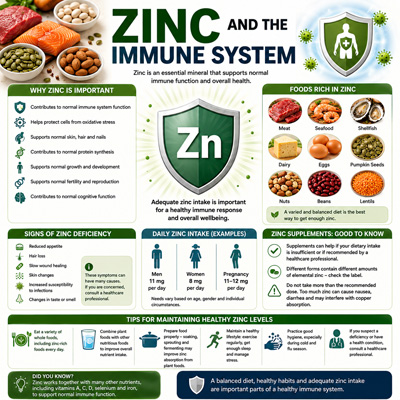
Zinc is an essential mineral that plays an important role in many functions of the body. It contributes to the normal function of the immune system, helps protect cells from oxidative stress and supports normal metabolism.
The body does not store large amounts of zinc, so regular dietary intake is important.
Zinc can be obtained from a variety of foods, including meat, seafood, dairy products, nuts, seeds and legumes. In some situations, zinc supplements may also be appropriate.
This guide explains why zinc is important for the immune system, which foods provide zinc and what to know about supplementation.
Why Is Zinc Important?
Zinc contributes to many normal functions in the body.
It contributes to:
- normal immune system function;
- protection of cells from oxidative stress;
- normal carbohydrate metabolism;
- normal cognitive function;
- normal fertility and reproduction;
- maintenance of normal bones;
- maintenance of normal skin;
- maintenance of normal hair and nails;
- normal protein synthesis;
- normal DNA synthesis;
- normal acid-base metabolism.
Zinc is therefore important for both immune health and overall wellbeing.
Zinc and the Immune System
Zinc contributes to the normal function of the immune system.
The immune system requires a range of vitamins and minerals to work properly. Zinc is one of the essential nutrients involved in maintaining normal immune function.
Adequate zinc intake can be achieved through a varied and balanced diet.
However, taking additional zinc does not necessarily mean that the immune system will become stronger. Supplements are most useful when dietary intake is inadequate or when supplementation is recommended by a healthcare professional.
Symptoms of Zinc Deficiency
Zinc deficiency is not common in people who follow a varied diet, but inadequate intake or absorption can occur in certain circumstances.
Possible signs of inadequate zinc status may include:
- reduced appetite;
- changes in taste or smell;
- slower wound healing;
- skin changes;
- hair loss;
- increased susceptibility to infections;
- impaired growth in children.
These symptoms can have many different causes and should not automatically be attributed to zinc deficiency.
If a deficiency is suspected, a healthcare professional can assess the situation and recommend appropriate testing or treatment.
Foods Rich in Zinc
Zinc is found in many animal and plant foods.
Good dietary sources include:
- beef;
- pork;
- poultry;
- fish;
- seafood;
- shellfish;
- eggs;
- milk;
- cheese;
- yogurt;
- pumpkin seeds;
- nuts;
- beans;
- lentils;
- whole grains.
Including a variety of these foods in your diet can help provide adequate zinc.
Zinc From Animal and Plant Foods
Zinc from animal-derived foods is generally well absorbed.
Plant-based foods can also provide zinc, although some compounds naturally present in plants can reduce zinc absorption.
People following vegetarian or vegan diets can obtain zinc from:
- legumes;
- nuts;
- seeds;
- whole grains;
- fortified foods.
Eating a varied diet is particularly important when limiting or avoiding animal-derived foods.
How Much Zinc Do You Need?
Daily zinc requirements depend on factors such as:
- age;
- sex;
- stage of life;
- pregnancy;
- breastfeeding;
- individual nutritional needs.
For most healthy adults, a varied diet can provide the required amount of zinc.
Rather than focusing only on individual supplements, it is generally better to consider your overall dietary pattern.
If you are concerned about your zinc intake, speak with a healthcare professional or qualified nutrition specialist.
Zinc Supplements
Zinc supplements are available in different forms, including:
- tablets;
- capsules;
- lozenges;
- effervescent preparations;
- liquid supplements.
They may be appropriate when dietary intake is inadequate or when recommended by a healthcare professional.
Different supplements may contain different zinc compounds and amounts of elemental zinc, so it is important to read the product label carefully.
Do not automatically assume that a higher dose provides greater benefits.
Can You Take Too Much Zinc?
Yes. Excessive zinc intake can cause unwanted effects.
High amounts may lead to:
- nausea;
- vomiting;
- stomach discomfort;
- diarrhea;
- headaches.
Long-term excessive zinc intake can also interfere with copper absorption and may contribute to copper deficiency.
For this reason, high-dose zinc supplements should not be taken routinely without an appropriate reason or professional advice.
Zinc and Other Nutrients
Zinc works as part of a broader network of nutrients that support normal body function.
A healthy diet should provide a variety of nutrients, including:
- zinc;
- vitamin C;
- vitamin D;
- selenium;
- iron;
- vitamin B12;
- folate;
- protein.
Rather than relying on one nutrient, a balanced diet with a wide variety of foods is the best foundation for nutritional health.
Zinc During Cold and Flu Season
Zinc is often discussed during the cold and flu season because of its role in normal immune function.
Maintaining adequate zinc intake is important for the body’s normal immune response.
However, zinc supplements should not be considered a guaranteed way to prevent respiratory infections.
During periods when colds and respiratory infections are common, it is also important to:
- wash your hands regularly;
- get enough sleep;
- eat a balanced diet;
- drink enough fluids;
- stay physically active;
- ventilate indoor spaces;
- avoid close contact with people who are sick.
Who May Be at Risk of Inadequate Zinc Intake?
Some people may have a higher risk of inadequate zinc intake or absorption.
This can include people who:
- follow highly restrictive diets;
- consume very little animal-derived food;
- have certain digestive conditions;
- have problems absorbing nutrients;
- have increased nutritional requirements;
- have certain chronic health conditions.
Having a risk factor does not necessarily mean that a person has zinc deficiency.
Zinc for Children
Zinc is also important during childhood because it contributes to normal growth and development.
Children have different nutritional requirements from adults, and the appropriate amount of zinc depends on age.
Zinc supplements should not be given to children in high doses unless recommended by a healthcare professional.
A varied diet appropriate for the child’s age is generally the best way to provide essential nutrients.
Zinc and Skin Health
Zinc contributes to the maintenance of normal skin.
It also contributes to normal protein synthesis and DNA synthesis, which are important processes throughout the body.
Zinc is therefore an important nutrient as part of a balanced diet, although taking extra zinc does not automatically improve skin health in people who already have adequate zinc intake.
Zinc and Wound Healing
Zinc contributes to normal maintenance of skin and is involved in several biological processes related to tissue function.
Adequate nutrition is important when the body is recovering from injury.
If a wound is slow to heal or appears infected, medical advice should be sought rather than relying on zinc supplements alone.
Frequently Asked Questions
Does zinc support the immune system?
Yes. Zinc contributes to the normal function of the immune system.
Which foods are high in zinc?
Good sources include meat, seafood, shellfish, dairy products, eggs, pumpkin seeds, nuts, beans, lentils and whole grains.
Can zinc prevent colds?
Adequate zinc intake supports normal immune function, but zinc supplementation does not guarantee that you will not develop a cold or another respiratory infection.
Can I take zinc every day?
Zinc can be consumed daily through food. If using supplements, follow the recommended dosage and avoid unnecessarily high amounts.
What happens if I take too much zinc?
Excessive zinc can cause nausea, vomiting, stomach discomfort and diarrhea. Long-term high intake can interfere with copper absorption.
Is zinc important for children?
Yes. Zinc contributes to normal growth and development. However, children’s nutritional requirements differ from those of adults.
Can vegetarians and vegans get enough zinc?
Yes. Legumes, nuts, seeds, whole grains and fortified foods can provide zinc. Because zinc absorption from some plant foods can be lower, dietary variety is especially important.
Key Takeaways
- Zinc is an essential mineral that contributes to the normal function of the immune system.
- It also contributes to normal skin, bones, protein synthesis and DNA synthesis.
- Meat, seafood, dairy products, nuts, seeds and legumes are important dietary sources.
- A varied and balanced diet is usually the best way to obtain zinc.
- Zinc supplements may be useful when dietary intake is inadequate.
- More zinc is not necessarily better.
- Excessive long-term zinc intake can interfere with copper absorption.
- People with restrictive diets or certain digestive conditions may need to pay particular attention to zinc intake.
- Zinc is one of several nutrients needed for normal immune function.
- A healthy lifestyle and balanced diet are important foundations for maintaining overall health.
Explore our Vitamins & Minerals section on our website to learn more about zinc, essential nutrients and ways to support your everyday health.
https://pharmatoo.com/product-category/vitamins-and-minerals/
Tags
- zinc
- zinc and immune system
- zinc for immunity
- zinc benefits
- zinc deficiency
- zinc supplements
- zinc rich foods
- foods high in zinc
- immune system
- immune support
- immunity
- immune health
- minerals for immunity
- essential minerals
- zinc intake
- daily zinc
- zinc and health
- zinc for immune health
- zinc and nutrition
- vitamin and mineral support
- vitamins and minerals
- healthy diet
- balanced diet
- healthy lifestyle
- nutrition
- cold and flu season
- respiratory health
- immune system support
- zinc for children
- zinc and skin health
- zinc and wound healing
