


Magnesium for Muscles: Benefits, Symptoms of Deficiency and How It Helps
Introduction
Magnesium is an essential mineral that plays an important role in normal muscle function. The body needs magnesium for many processes, including energy production, nerve signaling and maintaining normal muscle contraction and relaxation.
Because muscles constantly work throughout the day, getting enough magnesium through a balanced diet is important for overall muscle health.
In this article, we explain how magnesium supports muscles, what may happen when magnesium levels are low, dietary sources and when supplementation may be appropriate.
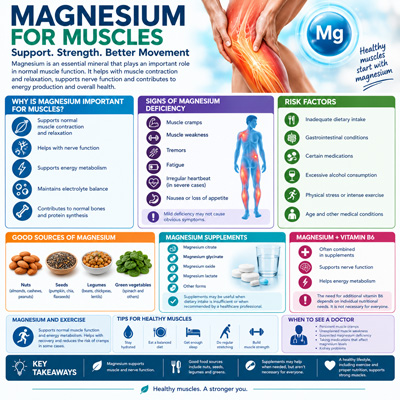
Why Is Magnesium Important for Muscles?
Magnesium is involved in the normal function of muscles and nerves.
It contributes to:
- normal muscle contraction and relaxation;
- normal nerve function;
- energy metabolism;
- electrolyte balance;
- normal protein synthesis;
- maintaining normal bones.
Muscle contraction requires a carefully controlled balance of minerals, including magnesium, calcium and potassium.
Magnesium and Muscle Relaxation
Muscle contraction and relaxation are closely connected.
Calcium plays an important role in triggering muscle contraction, while magnesium helps regulate processes involved in muscle relaxation.
For this reason, maintaining adequate magnesium intake supports normal muscle function.
A diet that provides sufficient magnesium is particularly important for people with active lifestyles and those whose nutritional intake may be inadequate.
Magnesium and Muscle Cramps
Muscle cramps are sudden, involuntary contractions that can be uncomfortable or painful.
Low magnesium levels can contribute to muscle problems in some situations. However, muscle cramps can have many other causes, including:
- dehydration;
- strenuous exercise;
- prolonged muscle use;
- electrolyte imbalances;
- certain medications;
- reduced blood flow;
- other medical conditions.
Therefore, recurring cramps should not automatically be attributed to magnesium deficiency.
Magnesium and Physical Activity
People who exercise regularly have increased nutritional needs and should pay attention to a balanced intake of minerals.
Magnesium contributes to normal energy metabolism and normal muscle function, making it an important nutrient for physically active people.
Good sources of magnesium include:
- nuts;
- seeds;
- whole grains;
- legumes;
- leafy green vegetables;
- certain fish;
- dark chocolate.
A varied diet can usually provide magnesium for most healthy people.
Signs of Low Magnesium
A mild magnesium deficiency may not cause obvious symptoms.
More significant deficiency can be associated with:
- muscle weakness;
- muscle cramps;
- tremors;
- fatigue;
- abnormal heart rhythm;
- nausea or loss of appetite.
Severe magnesium deficiency is uncommon in otherwise healthy people but can occur in certain medical situations.
If persistent muscle symptoms occur, it is better to determine the underlying cause rather than assuming that magnesium is responsible.
What Causes Magnesium Deficiency?
Low magnesium levels can be associated with:
- inadequate dietary intake;
- certain gastrointestinal conditions;
- prolonged diarrhea or vomiting;
- some medications;
- excessive alcohol consumption;
- certain medical conditions affecting magnesium absorption or loss.
People with ongoing health problems or those taking medications that may affect magnesium levels should discuss supplementation with a healthcare professional.
Best Food Sources of Magnesium
Magnesium is naturally present in many foods.
Nuts and seeds
Good options include:
- almonds;
- cashews;
- peanuts;
- pumpkin seeds;
- chia seeds;
- flaxseeds.
Green vegetables
Leafy greens such as spinach and other green vegetables can contribute magnesium to the diet.
Legumes
Beans, chickpeas and lentils are useful sources of magnesium.
Whole grains
Whole-grain products can provide magnesium as part of a balanced diet.
Other foods
Magnesium is also found in foods such as:
- avocado;
- certain fish;
- dark chocolate;
- tofu.
Eating a variety of these foods can help support adequate magnesium intake.
Magnesium Supplements
Magnesium supplements are available in several forms, including:
- magnesium citrate;
- magnesium oxide;
- magnesium glycinate;
- magnesium lactate;
- other magnesium salts.
Different forms can vary in how much magnesium they provide and how well they are absorbed.
Supplements should not automatically replace a balanced diet. They may be useful when dietary intake is insufficient or when a healthcare professional recommends supplementation.
Magnesium and Vitamin B6
Magnesium supplements are sometimes combined with vitamin B6.
Vitamin B6 is also an essential nutrient involved in normal nervous system function and energy metabolism.
Products containing magnesium and vitamin B6 are often marketed for nutritional support, but taking a combination product does not necessarily mean that everyone needs additional vitamin B6.
The appropriate supplement and dosage depend on individual nutritional needs.
How Much Magnesium Do You Need?
Daily magnesium requirements vary depending on age, sex and other factors.
For adults, recommended dietary amounts are generally around 310–420 mg per day, depending on sex and life stage.
Magnesium from food is generally preferred. When using supplements, it is important not to exceed recommended amounts unless advised by a healthcare professional.
Can Too Much Magnesium Be Harmful?
Magnesium from food is generally safe for healthy people.
High amounts of magnesium from supplements or medications can cause:
- diarrhea;
- nausea;
- abdominal cramping.
Very high magnesium intake can be dangerous, particularly in people with impaired kidney function.
If you have kidney disease or take regular medication, consult a healthcare professional before starting magnesium supplements.
Magnesium and Muscle Recovery
Magnesium is involved in energy metabolism and normal muscle function. Adequate nutritional intake therefore supports the body’s normal processes during and after physical activity.
However, magnesium should not be considered a substitute for the basic elements of recovery, such as:
- adequate sleep;
- sufficient fluids;
- balanced nutrition;
- appropriate rest;
- gradual training progression.
When Should You Consider Magnesium?
Magnesium supplementation may be worth discussing with a healthcare professional if:
- your diet is consistently low in magnesium-rich foods;
- you have a condition that can affect magnesium absorption;
- you take medications that can influence magnesium levels;
- laboratory tests indicate low magnesium;
- a healthcare professional recommends supplementation.
Taking magnesium simply because you experience muscle discomfort may not address the actual cause.
Frequently Asked Questions
Does magnesium help muscles?
Magnesium is essential for normal muscle function and contributes to normal muscle contraction and relaxation.
Can magnesium prevent muscle cramps?
Magnesium deficiency can contribute to muscle cramps, but cramps have many possible causes. Magnesium supplementation is most likely to be useful when inadequate magnesium is actually contributing to the problem.
What foods contain the most magnesium?
Nuts, seeds, legumes, whole grains and leafy green vegetables are among the useful dietary sources of magnesium.
Is magnesium good after exercise?
Adequate magnesium supports normal muscle function and energy metabolism. However, recovery also depends on hydration, nutrition, sleep and appropriate rest.
Can I take magnesium every day?
Some people take magnesium supplements daily, but the appropriate amount depends on individual needs. Follow the product instructions and consult a healthcare professional when necessary.
Can magnesium cause side effects?
High supplemental doses can cause diarrhea, nausea and abdominal discomfort. Very high levels can be dangerous, particularly for people with impaired kidney function.
Key Takeaways
- Magnesium is an essential mineral that supports normal muscle and nerve function.
- It plays an important role in normal muscle contraction and relaxation.
- Low magnesium levels can contribute to muscle cramps and weakness in some circumstances.
- Muscle cramps can have many causes and are not always related to magnesium deficiency.
- Nuts, seeds, legumes, whole grains and leafy green vegetables are good dietary sources.
- Magnesium supplements are available in several forms and should be used according to individual needs.
- Magnesium combined with vitamin B6 is a common supplement option, but additional vitamin B6 is not necessarily needed by everyone.
- Excessive supplemental magnesium can cause digestive side effects.
- People with kidney problems should consult a healthcare professional before taking magnesium supplements.
Explore our Vitamins & Minerals section on our website to learn more about magnesium, vitamin B6, nutritional deficiencies and everyday health.
https://pharmatoo.com/product-category/vitamins-and-minerals/
Tags
- magnesium for muscles
- magnesium and muscles
- magnesium benefits
- magnesium muscle function
- magnesium for muscle cramps
- magnesium deficiency
- symptoms of magnesium deficiency
- magnesium and muscle recovery
- magnesium and exercise
- magnesium for athletes
- muscle cramps
- muscle weakness
- muscle relaxation
- muscle health
- magnesium supplements
- magnesium tablets
- magnesium citrate
- magnesium glycinate
- magnesium oxide
- magnesium B6
- magnesium and vitamin B6
- vitamin B6
- magnesium rich foods
- foods high in magnesium
- magnesium nutrition
- mineral deficiency
- vitamins and minerals
- healthy muscles
- muscle recovery
- physical activity
- sports nutrition
- electrolyte balance
- energy metabolism
- healthy lifestyle
- health and wellness
