


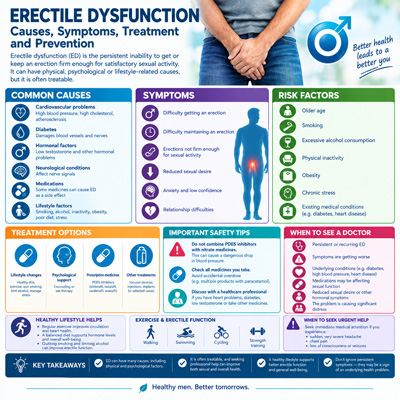
Erectile Dysfunction: Causes, Symptoms, Treatment and Prevention
Introduction
Erectile dysfunction (ED) is the inability to get or keep an erection firm enough for satisfactory sexual activity. Occasional difficulty with erections is common and does not necessarily indicate a medical problem. However, persistent or recurring erectile difficulties may be a sign of an underlying health condition.
Erectile dysfunction can affect men of different ages and may have physical, psychological or lifestyle-related causes. The good news is that ED is often treatable, and identifying the underlying cause can help determine the most appropriate treatment.
What Is Erectile Dysfunction?
An erection occurs through a complex interaction between the brain, nerves, hormones, blood vessels and penile tissues.
Erectile dysfunction can involve:
- difficulty getting an erection;
- difficulty maintaining an erection;
- erections that are not firm enough for sexual activity;
- reduced confidence related to sexual performance.
ED is different from occasionally experiencing difficulty with an erection. Persistent symptoms deserve medical attention.
Common Causes of Erectile Dysfunction
Erectile dysfunction can have many different causes.
Cardiovascular problems
Healthy blood vessels are essential for achieving an erection. Conditions that affect blood circulation may increase the risk of ED, including:
- high blood pressure;
- high cholesterol;
- atherosclerosis;
- cardiovascular disease.
Because the blood vessels involved in erections are relatively small, erectile problems can sometimes appear before other symptoms of cardiovascular disease.
Diabetes
Diabetes can damage blood vessels and nerves that are important for sexual function. Men with diabetes therefore have an increased risk of erectile dysfunction.
Hormonal factors
Low testosterone and other hormonal problems may contribute to reduced sexual desire or erectile difficulties.
Neurological conditions
Conditions affecting the nervous system can interfere with the signals required to produce an erection.
Medications
Some medicines can contribute to erectile difficulties as a side effect. Examples may include certain medicines used for blood pressure, depression and other conditions.
Never stop a prescribed medicine on your own. If you suspect a medication is affecting sexual function, discuss it with a healthcare professional.
Psychological Causes of ED
Erectile dysfunction is not always caused by a physical condition.
Psychological factors can include:
- stress;
- anxiety;
- depression;
- relationship difficulties;
- low self-confidence;
- fear of sexual failure;
- emotional distress.
Sometimes physical and psychological factors occur together. For example, experiencing difficulty with an erection can create anxiety, which can then make future erections more difficult.
Lifestyle Factors
Certain lifestyle habits can increase the risk of erectile dysfunction.
These include:
- smoking;
- excessive alcohol consumption;
- physical inactivity;
- obesity;
- an unhealthy diet;
- chronic stress;
- insufficient sleep.
Improving overall health can therefore support sexual health as well as cardiovascular and metabolic health.
Symptoms of Erectile Dysfunction
The main symptom is difficulty achieving or maintaining an erection.
Other associated symptoms may include:
- reduced sexual confidence;
- reduced sexual desire;
- difficulty maintaining an erection during intercourse;
- anxiety about sexual performance;
- relationship difficulties related to sexual problems.
If erectile difficulties happen regularly, medical evaluation can help identify the cause.
Erectile Dysfunction and Age
The risk of erectile dysfunction tends to increase with age, partly because conditions associated with ED become more common.
However, ED is not simply an inevitable part of getting older.
Persistent erectile problems should not be dismissed as something that must be accepted with age. Many underlying causes can be treated or managed.
How Is Erectile Dysfunction Diagnosed?
A healthcare professional may ask about:
- when the symptoms started;
- how often they occur;
- sexual desire;
- morning or spontaneous erections;
- current medications;
- lifestyle habits;
- stress and mental health;
- existing medical conditions.
Depending on the situation, examination and laboratory tests may also be recommended.
Possible tests can include assessments related to:
- blood glucose;
- cholesterol;
- testosterone;
- blood pressure;
- other factors determined by the patient’s symptoms and medical history.
Treatment for Erectile Dysfunction
Treatment depends on the underlying cause.
Lifestyle changes
Improving overall health can help some men with erectile difficulties.
Helpful measures may include:
- stopping smoking;
- reducing excessive alcohol consumption;
- exercising regularly;
- maintaining a healthy weight;
- following a balanced diet;
- getting adequate sleep;
- managing stress.
Psychological support
If anxiety, depression, relationship difficulties or other psychological factors contribute to ED, counseling or sex therapy may be helpful.
Prescription medicines
Several prescription medicines can improve blood flow to the penis and help produce an erection in response to sexual stimulation.
A commonly used group is called PDE5 inhibitors.
These medicines include:
- sildenafil;
- tadalafil;
- vardenafil;
- avanafil.
They are not suitable for everyone and should be used according to medical advice.
Erectile Dysfunction Medicines and Nitrates
An important safety issue concerns nitrate medicines used for certain heart conditions.
PDE5 inhibitors can cause a dangerous drop in blood pressure when combined with nitrates.
Examples of nitrate medicines include those containing:
- nitroglycerin;
- isosorbide dinitrate;
- isosorbide mononitrate.
Men taking nitrate medicines should not use PDE5 inhibitors without medical advice.
Always tell your healthcare professional about all medicines and supplements you take.
Other Treatment Options
When oral medicines are not suitable or do not work sufficiently, other treatments may sometimes be considered.
Depending on the cause and individual circumstances, options can include:
- vacuum erection devices;
- injectable medicines;
- intraurethral treatments;
- penile implants in selected cases.
A healthcare professional can explain the advantages and risks of each option.
Can Diet Help Erectile Function?
A healthy diet can support the cardiovascular system, which is closely connected to erectile function.
A balanced diet can include:
- vegetables;
- fruits;
- whole grains;
- legumes;
- nuts and seeds;
- fish;
- healthy sources of unsaturated fats.
Reducing excessive intake of highly processed foods, added sugars and unhealthy fats may also support overall cardiovascular health.
There is no single food that reliably cures erectile dysfunction.
Exercise and Erectile Function
Regular physical activity can improve cardiovascular health, circulation and metabolic health.
Activities such as:
- walking;
- cycling;
- swimming;
- strength training;
- other moderate physical activities
can contribute to a healthier lifestyle.
If you have not exercised for a long time or have significant health problems, discuss an appropriate exercise plan with a healthcare professional.
Smoking and Erectile Dysfunction
Smoking can damage blood vessels and impair circulation.
Because normal blood flow is essential for an erection, smoking can contribute to erectile dysfunction.
Quitting smoking can improve overall cardiovascular health and may also benefit sexual function.
Alcohol and Erectile Dysfunction
Excessive alcohol consumption can interfere with the nervous system, hormones and blood circulation.
It may contribute to temporary erectile difficulties and, with prolonged excessive use, may increase the risk of persistent sexual problems.
Reducing excessive alcohol consumption is therefore an important part of maintaining overall health.
Can Stress Cause Erectile Dysfunction?
Yes. Stress and anxiety can interfere with the psychological and physical processes involved in erections.
Performance anxiety can create a cycle:
worry → difficulty achieving an erection → increased anxiety → further difficulty with erections.
Addressing anxiety and reducing performance pressure may help break this cycle.
Erectile Dysfunction and Relationships
ED can affect more than physical sexual function. It may also influence:
- confidence;
- intimacy;
- communication;
- emotional well-being;
- relationships.
Open communication with a partner can reduce misunderstandings and anxiety.
If relationship difficulties are contributing to sexual problems, couples counseling or sex therapy may be beneficial.
When Should You See a Doctor?
Consider speaking with a healthcare professional if:
- erectile difficulties occur repeatedly;
- symptoms are getting worse;
- you have diabetes, high blood pressure or cardiovascular disease;
- you take medicines that may affect sexual function;
- you have reduced sexual desire;
- you experience other hormonal or urinary symptoms;
- the problem is causing significant distress.
Because ED can sometimes be associated with cardiovascular or metabolic problems, persistent symptoms should not simply be ignored.
Frequently Asked Questions
Is erectile dysfunction normal with age?
Erectile difficulties become more common with age, but persistent ED should not automatically be considered a normal or unavoidable part of aging.
Can erectile dysfunction be cured?
Many cases can be successfully treated or significantly improved. Treatment depends on the underlying cause.
Can stress cause ED?
Yes. Stress, anxiety and performance pressure can interfere with erections.
Does exercise help erectile function?
Regular physical activity supports cardiovascular health and may contribute to better erectile function.
Does smoking cause erectile dysfunction?
Smoking can damage blood vessels and reduce healthy blood flow, which may contribute to ED.
Are ED medicines safe for everyone?
No. PDE5 inhibitors are not appropriate for everyone and can be dangerous when combined with nitrate medicines. A healthcare professional should determine whether they are suitable.
Can low testosterone cause ED?
Low testosterone can contribute to reduced sexual desire and sometimes erectile difficulties, but not every case of ED is caused by low testosterone.
Key Takeaways
- Erectile dysfunction is the persistent inability to achieve or maintain an erection sufficient for satisfactory sexual activity.
- ED can have physical, psychological and lifestyle-related causes.
- Cardiovascular disease, diabetes, high blood pressure, certain medications and hormonal problems can contribute to ED.
- Stress, anxiety and relationship difficulties may also play an important role.
- Smoking, excessive alcohol consumption, inactivity and obesity can increase the risk.
- Regular exercise, a balanced diet, healthy weight and smoking cessation can support overall sexual health.
- Prescription treatments such as PDE5 inhibitors can be effective for many men but are not suitable for everyone.
- PDE5 inhibitors must not be combined with nitrate medicines because the combination can cause a dangerous drop in blood pressure.
- Persistent erectile difficulties deserve medical evaluation because ED can sometimes be an early sign of an underlying health problem.
- Erectile dysfunction is often treatable, and seeking professional help can improve both sexual and overall health.
Explore our Men’s Health section on our website to learn more about erectile dysfunction, men’s health, lifestyle factors and treatment options.
https://pharmatoo.com/product-category/sexual-health/erectile-dysfunction/
Tags
- erectile dysfunction
- ED
- erectile dysfunction causes
- erectile dysfunction symptoms
- erectile dysfunction treatment
- men’s health
- sexual health
- male sexual health
- erection problems
- difficulty maintaining erection
- difficulty getting erection
- erectile function
- sexual performance
- ED treatment
- ED medicines
- PDE5 inhibitors
- sildenafil
- tadalafil
- vardenafil
- avanafil
- low testosterone
- testosterone and ED
- diabetes and erectile dysfunction
- high blood pressure and ED
- cardiovascular health
- smoking and ED
- alcohol and erectile dysfunction
- stress and ED
- anxiety and erectile dysfunction
- exercise and erectile function
- healthy lifestyle
- men’s wellness
- sexual wellness
- men’s health advice
- erectile dysfunction prevention
- impotence
- circulation and erections
- blood flow and erectile function
- relationship and sexual health
- performance anxiety
- men’s health treatment
