


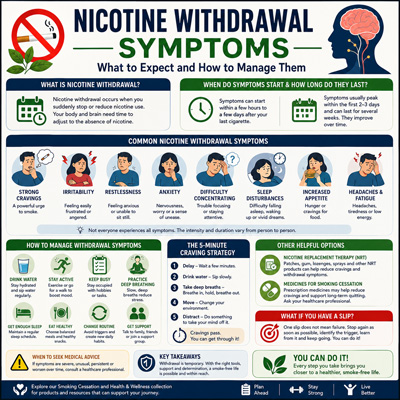
Nicotine Withdrawal Symptoms: What to Expect and How to Manage Them
Introduction
Nicotine withdrawal is a natural response that can occur when a person who regularly uses nicotine suddenly stops or significantly reduces their nicotine intake.
Nicotine is addictive, and the brain and body can become accustomed to its presence. When nicotine is removed, temporary physical, emotional and behavioral symptoms may appear.
Withdrawal can be uncomfortable, but it is usually temporary. Understanding what to expect can make the process easier to manage and can help you stay committed to quitting.
This guide explains the most common nicotine withdrawal symptoms, when they may occur and practical ways to manage them.
What Is Nicotine Withdrawal?
Nicotine withdrawal occurs when the body and brain adjust to the absence of nicotine after regular use.
Nicotine affects brain receptors and influences the release of neurotransmitters associated with pleasure, concentration and mood.
With regular nicotine use, the brain adapts to its presence. When nicotine intake stops, the brain needs time to adjust to functioning without it.
This adjustment can cause a range of temporary symptoms.
Common Nicotine Withdrawal Symptoms
Symptoms vary from person to person.
Common withdrawal symptoms include:
- strong cravings for nicotine;
- irritability;
- restlessness;
- anxiety;
- difficulty concentrating;
- changes in mood;
- difficulty sleeping;
- increased appetite;
- headaches;
- fatigue;
- difficulty relaxing.
Not everyone experiences all of these symptoms.
The intensity can also depend on how frequently and how long a person has used nicotine.
Strong Nicotine Cravings
One of the most noticeable withdrawal symptoms is a strong desire to smoke or use another nicotine product.
Cravings may be triggered by:
- coffee;
- alcohol;
- stress;
- driving;
- meals;
- work breaks;
- boredom;
- social situations;
- seeing other people smoke.
A craving does not last forever. Learning to recognize and manage these triggers can help you remain nicotine-free.
Irritability and Mood Changes
Some people feel more irritable, frustrated or emotionally sensitive after stopping nicotine.
You may notice:
- a shorter temper;
- frustration;
- mood changes;
- difficulty relaxing;
- feeling emotionally unsettled.
These changes can be difficult, especially during the first stages of quitting.
Taking short breaks, exercising, practicing slow breathing and talking with supportive people may help.
Anxiety and Restlessness
Nicotine withdrawal can be accompanied by feelings of anxiety or restlessness.
You may feel:
- unable to sit still;
- tense;
- nervous;
- uncomfortable without your usual nicotine routine.
Physical activity can provide a useful distraction and may help reduce restlessness.
Walking, stretching or another enjoyable activity can also help occupy the time when you would normally use nicotine.
Difficulty Concentrating
Some people experience temporary difficulty concentrating after stopping nicotine.
This may be noticeable during:
- work;
- studying;
- reading;
- long conversations;
- tasks requiring sustained attention.
Planning shorter periods of focused work and taking regular breaks can make this period easier.
Getting enough sleep and maintaining regular meals may also support your daily routine.
Sleep Problems
Changes in sleep can occur during nicotine withdrawal.
Some people may experience:
- difficulty falling asleep;
- waking during the night;
- unusual dreams;
- changes in their normal sleep schedule.
Try to maintain a consistent bedtime and wake-up time.
A relaxing evening routine and limiting stimulating activities before bed may also be helpful.
Increased Appetite
Some people notice an increase in appetite after stopping nicotine.
You may feel more interested in food or want to snack more often.
Helpful strategies include:
- choosing balanced meals;
- keeping healthy snacks available;
- drinking water regularly;
- eating slowly;
- staying physically active.
It can also help to distinguish between genuine hunger and the desire to replace the habit of smoking with another activity.
Fatigue and Low Energy
Temporary tiredness can occur during nicotine withdrawal.
Your body and brain are adjusting to the absence of nicotine, and this process may affect your usual energy levels.
Try to:
- get enough sleep;
- maintain a regular daily routine;
- stay physically active;
- drink enough fluids;
- eat balanced meals.
If fatigue is severe, persistent or unexplained, discuss it with a healthcare professional.
Headaches and Other Physical Symptoms
Some people experience physical symptoms such as headaches during nicotine withdrawal.
Other symptoms can vary between individuals.
If a symptom is severe, unusual, persistent or concerning, do not automatically assume that it is caused by nicotine withdrawal. Speak with a healthcare professional to determine the possible cause.
When Do Nicotine Withdrawal Symptoms Start?
Withdrawal symptoms can begin relatively soon after nicotine intake stops.
The exact timing varies depending on:
- the person’s level of nicotine dependence;
- how frequently nicotine was used;
- the type of nicotine product;
- individual differences.
Some symptoms may appear within hours, while others develop later.
How Long Does Nicotine Withdrawal Last?
Nicotine withdrawal is generally temporary, but the duration varies from person to person.
Some symptoms may improve relatively quickly, while cravings and certain habit-related triggers can continue for longer.
Over time, withdrawal symptoms generally become less intense and less frequent as the body adapts to life without nicotine.
How to Manage Nicotine Withdrawal Symptoms
There are several practical strategies that can make withdrawal easier.
Drink Water
Keeping hydrated can help you maintain a healthy routine and gives you something to do when a craving appears.
Stay Active
Walking, exercise or another physical activity can provide a distraction and help manage restlessness.
Keep Yourself Busy
Reading, cleaning, listening to music, working on a hobby or spending time with friends can help redirect your attention.
Practice Slow Breathing
Slow, controlled breathing can be useful during stressful moments or strong cravings.
Change Your Routine
If certain activities are strongly associated with smoking, temporarily change your routine to break the connection.
Get Enough Sleep
Maintaining a regular sleep schedule can help you manage tiredness and changes in mood.
The 5-Minute Craving Strategy
When a strong craving appears, try focusing only on getting through the next few minutes.
You can:
- Delay acting on the craving.
- Drink a glass of water.
- Take several slow breaths.
- Move to a different location.
- Distract yourself with another activity.
The goal is to allow the craving to pass without using nicotine.
Nicotine Replacement Therapy
Nicotine replacement therapy (NRT) can provide controlled amounts of nicotine without the harmful substances produced by burning tobacco.
Common forms include:
- nicotine patches;
- nicotine gum;
- nicotine lozenges;
- nicotine sprays;
- other nicotine replacement products.
NRT may help reduce nicotine cravings and withdrawal symptoms for some people.
A pharmacist or healthcare professional can help determine which option may be appropriate and explain how to use it correctly.
Medicines for Smoking Cessation
Some people may benefit from medicines specifically designed to support smoking cessation.
These treatments work differently and may help reduce cravings or other aspects of nicotine dependence.
A healthcare professional can advise whether a particular treatment is appropriate based on your circumstances.
Get Support
Quitting nicotine can be easier with support.
Consider talking to:
- a doctor;
- a pharmacist;
- a smoking-cessation specialist;
- family members;
- friends;
- a counselor;
- a smoking-cessation support group.
Tell people close to you that you are quitting so they understand why you may experience changes in mood or behavior.
Avoid Your Personal Triggers
During the early stages of quitting, try to identify situations that make you want to use nicotine.
For example:
After meals: take a short walk.
During a work break: drink water or stretch.
When stressed: practice slow breathing.
With coffee: change your routine temporarily.
When bored: start a short activity or hobby.
Preparing alternatives before cravings appear can make them easier to manage.
What If You Have a Slip?
A single cigarette or use of nicotine does not mean that your attempt has failed.
If you have a slip:
- Stop again as soon as possible.
- Identify what triggered the nicotine use.
- Think about what you could do differently next time.
- Remove remaining nicotine products.
- Continue with your quit plan.
- Ask for additional support if necessary.
Learning from a difficult situation can help prevent future slips.
When Should You Seek Medical Advice?
Not every symptom experienced after quitting nicotine is necessarily caused by withdrawal.
Contact a healthcare professional if you experience symptoms that are:
- severe;
- unusual;
- persistent;
- getting worse;
- difficult to manage.
Professional advice can also be helpful if you have tried to quit several times or are struggling to control nicotine cravings.
Frequently Asked Questions
What is the most common nicotine withdrawal symptom?
Strong cravings for nicotine are among the most common symptoms. Irritability, restlessness, difficulty concentrating and changes in sleep or appetite can also occur.
How long do nicotine withdrawal symptoms last?
The duration varies from person to person. Symptoms generally become easier to manage as the body adjusts to life without nicotine.
Can nicotine withdrawal make you tired?
Yes. Temporary fatigue or reduced energy can occur after stopping nicotine.
Can quitting nicotine affect sleep?
Yes. Some people experience temporary changes in sleep, including difficulty falling asleep or unusual dreams.
Why am I more hungry after quitting?
Increased appetite can occur during nicotine withdrawal. Changing routines and choosing balanced meals and healthy snacks can help.
How can I stop nicotine cravings?
Try delaying the craving, drinking water, changing your environment, staying busy, taking a walk or practicing slow breathing.
Can nicotine replacement therapy help?
NRT may reduce cravings and withdrawal symptoms for some people. A pharmacist or healthcare professional can advise you about appropriate options.
Is nicotine withdrawal dangerous?
Nicotine withdrawal is generally uncomfortable rather than dangerous, but symptoms should not automatically be attributed to withdrawal. Severe or unusual symptoms should be assessed by a healthcare professional.
Key Takeaways
- Nicotine withdrawal occurs when the body adjusts to reduced or discontinued nicotine intake.
- Common symptoms include cravings, irritability, restlessness, anxiety, difficulty concentrating, sleep changes and increased appetite.
- Withdrawal symptoms are temporary and generally become easier to manage over time.
- Identifying personal triggers can help prevent relapse.
- Staying busy, drinking water, exercising and practicing slow breathing can help manage cravings.
- Nicotine replacement therapy may help reduce withdrawal symptoms for some people.
- Professional support can make quitting easier.
- A slip does not mean that you have failed.
- If symptoms are severe, unusual or persistent, seek medical advice.
- Staying committed to a quit plan can help you move toward a nicotine-free lifestyle.
Explore our Smoking Cessation and Health & Wellness collection for products and resources that can support your journey toward a smoke-free lifestyle.
https://pharmatoo.com/product-category/pharmacy/anti-smoking/
Tags
- nicotine withdrawal symptoms
- nicotine withdrawal
- nicotine withdrawal treatment
- nicotine cravings
- nicotine addiction
- nicotine dependence
- quit smoking
- stop smoking
- smoking cessation
- smoking withdrawal
- cigarette cravings
- nicotine replacement therapy
- nicotine patches
- nicotine gum
- nicotine lozenges
- smoking cessation support
- quit smoking tips
- smoking withdrawal symptoms
- how to quit nicotine
- how to stop smoking
- tobacco cessation
- quit smoking plan
- smoke-free lifestyle
- life without cigarettes
