


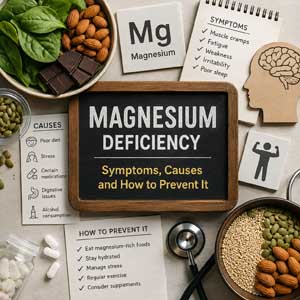
Magnesium Deficiency: Symptoms, Causes and How to Prevent It
Introduction
Magnesium is an essential mineral involved in many important processes in the human body. Magnesium contributes to normal muscle and nerve function, energy metabolism, electrolyte balance and the maintenance of normal bones.
Magnesium deficiency can occur when the body does not receive or absorb enough magnesium. However, clinically significant magnesium deficiency is not common in otherwise healthy people.
Understanding the possible symptoms, causes, dietary sources and risk factors can help you make informed decisions about your nutrition and understand when professional medical advice may be appropriate.
What Is Magnesium?
Magnesium is an essential mineral that the body needs for many normal physiological functions.
Why Does the Body Need Magnesium?
Magnesium is involved in:
- normal muscle function
- normal nerve function
- energy metabolism
- electrolyte balance
- normal bone health
- numerous biochemical reactions in the body
How Much Magnesium Does the Body Need?
The amount of magnesium a person needs can vary depending on factors such as:
- age
- sex
- pregnancy
- breastfeeding
- dietary intake
- individual health circumstances
Recommended daily intake should be based on authoritative nutritional guidance rather than a universal dose for everyone.
What Is Magnesium Deficiency?
Magnesium deficiency means that the body does not have enough magnesium to maintain normal physiological functions.
A low dietary intake does not necessarily mean that a person has a clinically significant deficiency. The body regulates magnesium levels, and deficiency may have different causes.
It is also important to remember that symptoms associated with low magnesium can have many other causes.
For example, muscle cramps, tiredness or weakness do not automatically mean that a person has magnesium deficiency.
Magnesium Deficiency Symptoms
The symptoms of magnesium deficiency can vary depending on the severity and underlying cause.
Early Symptoms
Possible symptoms may include:
- loss of appetite
- nausea
- fatigue
- weakness
These symptoms are nonspecific and may occur for many different reasons.
More Severe Symptoms
More significant magnesium deficiency may be associated with:
- muscle cramps
- muscle weakness
- numbness or tingling
- abnormal heart rhythm
- neurological symptoms
- other changes in muscle and nerve function
Severe or persistent symptoms should be evaluated by a qualified healthcare professional.
What Causes Magnesium Deficiency?
Magnesium deficiency can have several possible causes.
Low Magnesium Intake
A diet that consistently provides insufficient magnesium may contribute to low magnesium intake.
Foods containing magnesium include:
- nuts
- seeds
- legumes
- whole grains
- leafy green vegetables
- some dairy products
- certain seafood
Problems With Magnesium Absorption
Some gastrointestinal conditions may affect the body’s ability to absorb nutrients, including magnesium.
Examples may include certain disorders affecting the digestive system.
Certain Medications
Some medicines can affect magnesium levels or magnesium balance.
People taking long-term medication should discuss possible nutritional or electrolyte effects with a healthcare professional rather than changing treatment independently.
Other Risk Factors
Other circumstances may increase the risk of low magnesium levels, depending on the individual situation.
These can include:
- certain gastrointestinal conditions
- conditions affecting nutrient absorption
- prolonged inadequate dietary intake
- some chronic health conditions
- alcohol dependence
- use of certain medicines
Who Is at Risk of Magnesium Deficiency?
Some people may have a higher risk of magnesium deficiency or low magnesium levels.
Potential risk groups can include people with:
- certain gastrointestinal disorders
- conditions affecting nutrient absorption
- prolonged inadequate dietary intake
- certain chronic conditions
- long-term use of medicines that can affect magnesium balance
Risk depends on the individual’s health and circumstances.
People who believe they may be at risk should discuss their situation with a healthcare professional.
Magnesium-Rich Foods
One of the best ways to obtain magnesium is through a varied and balanced diet.
Foods High in Magnesium
Magnesium can be found in foods such as:
| Food Group | Examples |
| Nuts | Almonds, cashews and other nuts |
| Seeds | Pumpkin seeds, chia seeds and other seeds |
| Vegetables | Spinach and other leafy green vegetables |
| Legumes | Beans, lentils and peas |
| Whole grains | Whole-grain cereals and grains |
| Seafood | Selected fish and seafood |
| Other foods | Some dairy products and other magnesium-containing foods |
Exact magnesium content varies by food, serving size and preparation method.
For nutritional values, Pharmatoo should reference authoritative nutritional databases such as USDA FoodData Central where appropriate.
Can You Get Enough Magnesium From Food?
Many people can obtain sufficient magnesium through a varied diet.
A balanced eating pattern that includes vegetables, legumes, nuts, seeds and whole grains can provide magnesium as part of overall nutrition.
Supplements are not automatically necessary for everyone.
Magnesium Supplements
Magnesium supplements may be useful in certain situations, but they are not appropriate for everyone.
When Are Magnesium Supplements Used?
Supplementation may be considered when dietary intake is insufficient or when recommended by a healthcare professional.
The appropriate form and amount can depend on the individual and the reason for supplementation.
Different Forms of Magnesium
Magnesium supplements are available in different forms, including:
- magnesium citrate
- magnesium oxide
- magnesium glycinate
- magnesium chloride
- other magnesium salts
Different forms may have different characteristics, including absorption and gastrointestinal tolerability.
Product information should always be checked before use.
Magnesium and Vitamin B6
Magnesium and vitamin B6 are different nutrients, although they may be combined in some dietary supplements.
Read the related Pharmatoo article:
Magnesium vs Magnesium B6: What’s the Difference?
Magnesium Deficiency and Muscle Cramps
Magnesium is involved in normal muscle function, which is why magnesium and muscle cramps are often discussed together.
However, muscle cramps can have many possible causes.
They do not automatically indicate magnesium deficiency.
Possible factors associated with muscle cramps may include:
- physical activity
- dehydration
- electrolyte changes
- certain medicines
- nutritional factors
- underlying medical conditions
Persistent or severe muscle cramps should be discussed with a healthcare professional.
How Is Magnesium Deficiency Diagnosed?
Magnesium deficiency should not be diagnosed solely from symptoms.
A healthcare professional may consider:
- medical history
- symptoms
- dietary intake
- existing health conditions
- medicines being taken
- laboratory testing when appropriate
The interpretation of magnesium measurements should be made in the context of the individual’s overall health.
If you suspect magnesium deficiency, speak with a qualified healthcare professional.
How to Prevent Magnesium Deficiency
Eat a Balanced Diet
Include a variety of nutrient-rich foods in your diet.
Include Magnesium-Rich Foods
Consider foods such as:
- nuts
- seeds
- legumes
- whole grains
- leafy green vegetables
Discuss Supplements With a Healthcare Professional
Do not assume that everyone needs a magnesium supplement.
A healthcare professional can help determine whether supplementation is appropriate.
Consider Underlying Conditions
People with digestive disorders, certain chronic conditions or other risk factors may require individualized medical advice.
When Should You See a Healthcare Professional?
Medical advice may be appropriate when:
- symptoms persist
- symptoms are severe
- unexplained weakness occurs
- significant muscle symptoms develop
- abnormal heartbeat occurs
- neurological symptoms appear
- there is a known condition affecting nutrient absorption
- you take medicines that may affect magnesium levels
Do not use supplements as a substitute for medical diagnosis or treatment.
Frequently Asked Questions
What are the most common symptoms of magnesium deficiency?
Possible symptoms include fatigue, weakness, loss of appetite and nausea. More significant deficiency may be associated with muscle cramps, weakness, neurological symptoms or abnormal heart rhythm.
Can magnesium deficiency cause muscle cramps?
Magnesium plays an important role in normal muscle function, but muscle cramps have many possible causes and do not necessarily mean that a person has magnesium deficiency.
What foods are high in magnesium?
Magnesium is found in foods such as nuts, seeds, legumes, whole grains and leafy green vegetables.
How can I increase my magnesium intake?
A varied diet containing magnesium-rich foods can help increase magnesium intake. Supplements may be appropriate for some people, but should be considered based on individual circumstances.
Can you get enough magnesium from food?
Many people can obtain sufficient magnesium through a balanced diet. Individual needs vary.Should I take a magnesium supplement?
Not everyone needs supplementation. If you are concerned about your magnesium intake or have possible deficiency symptoms, discuss your situation with a healthcare professional.Is magnesium deficiency common?
Clinically significant magnesium deficiency is not common in otherwise healthy people, although inadequate magnesium intake can occur.
When should I see a doctor about low magnesium?
Seek professional advice if you have persistent or severe symptoms, known risk factors or a health condition that may affect magnesium absorption or balance.
Key Takeaways
- Magnesium is an essential mineral involved in many important body functions.
- Magnesium can be obtained from a wide range of foods.
- Magnesium deficiency can have different causes.
- Symptoms of low magnesium are not specific and can have other causes.
- Muscle cramps do not automatically indicate magnesium deficiency.
- A balanced diet is an important source of magnesium.
- Magnesium supplements are not necessary for everyone.
People with persistent or severe symptoms should seek professional medical advice.

AEROSPAN Inhalation Aerosol (Flunisolide)
LASIX 500 mg, 100 tablets
NEOTIGASON 25 mg Capsules

NEOFOLLIN 5 mg/ml Injection Solution, 5 × 1 ml

Antiparasitic Drugs for Adults: Types, Uses, and Safety
Thiocodine Syrup 15 mg + 300 mg/10 ml, 100 ml

Amol 100 ml – Oral and Topical Liquid
Inventum Max 50 mg, 4 Tablets, Aflofarm

Denicit 1.5 mg, 100 Tablets

Nurofen Forte Ibuprofen 400 mg Painkillers, 48 Tablets, Reckitt Benckiser
Lioton 1000 IU/g Gel 100 g

