


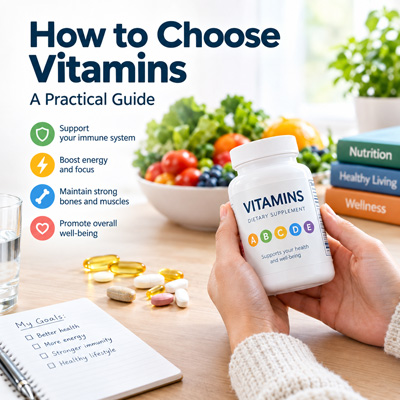
How to Choose Vitamins: A Practical Guide
Introduction
Vitamins are essential nutrients that support many important functions in the body, including energy metabolism, immune function, bone health, skin health and normal nervous system activity. Although a balanced diet should provide most of the vitamins the body needs, supplements can sometimes be useful when dietary intake is insufficient or when a specific nutritional need has been identified.
Choosing the right vitamins can be confusing because there are many different products, doses and combinations available. Understanding your individual needs and reading supplement labels carefully can help you make a more informed choice.
Why Are Vitamins Important?
Vitamins help the body carry out essential biological processes. Different vitamins have different roles:
- Vitamin A supports normal vision, skin and immune function.
- B vitamins help support energy metabolism and the nervous system.
- Vitamin C contributes to normal immune function and helps protect cells from oxidative stress.
- Vitamin D is important for bones, muscles and normal immune function.
- Vitamin E contributes to protection of cells from oxidative stress.
- Vitamin K plays an important role in normal blood clotting and bone health.
A varied diet containing vegetables, fruits, whole grains, legumes, dairy products or suitable alternatives, eggs, fish, meat and other nutrient-rich foods can help provide a broad range of vitamins.
How to Choose the Right Vitamins
The right supplement depends on your nutritional needs rather than simply choosing the product with the highest dose.
1. Consider Your Diet
Start by looking at your everyday diet. If you regularly eat a wide variety of nutrient-rich foods, you may not need many supplements.
Dietary restrictions, limited food variety or low intake of certain food groups can increase the risk of inadequate vitamin intake.
2. Think About Your Individual Needs
Vitamin requirements can vary depending on age, lifestyle and other circumstances. Some people may have a greater need for particular nutrients.
Vitamin supplementation may be considered when there is:
- Limited dietary intake
- A confirmed nutritional deficiency
- Increased nutritional requirements
- Difficulty absorbing certain nutrients
- A medically recommended dietary restriction
If you suspect a deficiency, professional advice and appropriate testing may be more useful than choosing a supplement based only on symptoms.
3. Check the Dosage
More is not always better. Some vitamins can accumulate in the body, particularly fat-soluble vitamins such as vitamins A, D, E and K.
Always check how much of each nutrient a product provides per serving and compare it with recommended daily amounts and established upper intake limits where applicable.
Avoid taking several products that contain the same vitamin unless you have checked the total daily amount.
4. Choose the Appropriate Form
Vitamins are available in many forms, including:
- Tablets
- Capsules
- Soft capsules
- Powders
- Effervescent tablets
- Liquid preparations
- Chewable products
The best form is generally the one that provides an appropriate dose and that you can take correctly and consistently.
5. Look at the Ingredients
Read the full product label rather than focusing only on the name of the vitamin.
Check:
- Active ingredients
- Amount per serving
- Recommended daily intake
- Serving size
- Additional vitamins and minerals
- Sweeteners or other additives
- Allergen information where relevant
This is especially important when using several supplements at the same time.
Vitamins and Minerals Together
Many products combine vitamins with minerals such as magnesium, zinc, calcium or iron. These combinations can be useful when several nutrients are needed, but they are not automatically necessary for everyone.
For example, a multivitamin may contain many nutrients in relatively moderate amounts, while a single-nutrient supplement may provide a substantially higher amount of one vitamin or mineral.
Choose according to your actual nutritional needs rather than the number of ingredients listed on the package.
Multivitamins vs. Individual Vitamins
Multivitamins
A multivitamin usually contains several vitamins and minerals in one product. It can be convenient for people who want a broad nutritional supplement.
However, a multivitamin may not provide enough of a particular nutrient when a deficiency has been diagnosed.
Individual Vitamins
A single-vitamin supplement can be more appropriate when there is a specific nutritional need.
For example, a healthcare professional may recommend a particular vitamin after considering diet, symptoms, laboratory results or other factors.
Should You Take Vitamins Every Day?
Not everyone needs daily vitamin supplementation. Whether a supplement should be taken every day depends on the specific product, dose and individual nutritional needs.
Some supplements are intended for regular daily use, while others may be recommended for a limited period.
Follow the product instructions and professional advice, and avoid increasing the dose simply because you do not notice an immediate effect.
Can You Take Several Vitamins Together?
Some vitamins and minerals can be taken together, but combining multiple supplements can unintentionally lead to excessive intake.
Before combining products, check whether they contain the same nutrients. Pay particular attention to multivitamins combined with individual vitamin or mineral supplements.
If you take prescription medicines, ask a doctor or pharmacist whether your supplements could interact with them.
When Should You Talk to a Doctor or Pharmacist?
Professional advice is particularly important if you:
- Have been diagnosed with a vitamin or mineral deficiency
- Take prescription medicines regularly
- Have a chronic medical condition
- Are pregnant or breastfeeding
- Are considering high-dose supplementation
- Are planning to give supplements to a child
- Are taking several supplements at the same time
A healthcare professional can help determine whether supplementation is appropriate and what dose may be suitable.
Common Mistakes When Choosing Vitamins
Several common mistakes can make vitamin supplementation less useful or less safe.
Choosing the Highest Dose
A higher dose does not necessarily provide greater benefit. Excessive intake of certain nutrients can cause adverse effects.
Taking Too Many Products
Using several supplements without checking their ingredients can result in unnecessary duplication.
Replacing a Healthy Diet
Vitamins should not be considered a substitute for a varied and balanced diet.
Ignoring Medication Interactions
Some vitamins and minerals can affect the absorption or action of certain medicines. Always consider your complete medication and supplement routine.
Taking Supplements Without a Clear Reason
Taking a supplement simply because it is popular does not mean that it is necessary for you. Consider your diet, nutritional requirements and professional recommendations.
How to Choose a Quality Vitamin Supplement
When comparing products, consider:
- Clearly stated ingredients and doses
- Appropriate serving size
- Reliable manufacturer information
- Clear directions for use
- Suitable storage instructions
- Expiration date
- Packaging that is intact
Avoid products with unclear labeling or exaggerated claims about treating or preventing diseases.
Vitamins for Different Life Stages
Nutritional needs can change throughout life. Children, teenagers, adults and older adults may have different nutritional requirements.
Pregnancy and breastfeeding also involve specific nutritional considerations. Supplements intended for these periods should be selected carefully and preferably discussed with a healthcare professional.
Can Food Provide Enough Vitamins?
For many people, a balanced diet can provide most essential vitamins. Foods such as vegetables, fruits, whole grains, legumes, nuts, seeds, dairy products or alternatives, eggs, fish and lean meats can contribute important nutrients.
However, individual circumstances can make supplementation appropriate in some cases.
The goal should be to use supplements to complement a healthy diet rather than replace nutritious foods.
Safer Vitamin Use
To use vitamin supplements safely:
- Follow the recommended dose.
- Do not assume that higher doses are better.
- Check the ingredients before combining supplements.
- Keep supplements away from children.
- Store products according to the instructions.
- Do not use products past their expiration date.
- Tell your doctor or pharmacist about supplements you take.
- Seek professional advice before using high-dose supplements.
If you experience an unexpected or severe reaction after taking a supplement, stop using it and seek appropriate medical advice.
Frequently Asked Questions
How do I know which vitamins I need?
Your diet, age, lifestyle and individual nutritional needs can help determine whether supplementation is appropriate. If deficiency is suspected, professional assessment and testing may be useful.
Is a multivitamin better than a single vitamin?
Not necessarily. A multivitamin provides several nutrients, while an individual supplement can target a specific nutritional need. The appropriate option depends on the individual.
Can I take vitamins every day?
Some vitamin supplements are designed for daily use, but the appropriate schedule depends on the specific nutrient and dose. Follow the product instructions or professional advice.
Can I take different vitamins together?
Some can be taken together, but combining multiple products may result in excessive intake of certain nutrients. Always check the labels and total daily amounts.
Are expensive vitamins better?
Price alone does not determine whether a supplement is appropriate. Look at the ingredients, dosage, quality information and suitability for your needs.
Can vitamins replace a healthy diet?
No. Supplements are intended to complement a balanced diet, not replace a varied intake of nutritious foods.
Key Takeaways
Choosing vitamins should be based on your nutritional needs rather than marketing claims or high doses.
Before selecting a supplement:
- Consider your diet and lifestyle.
- Identify whether you have a specific nutritional need.
- Check the dose and ingredients carefully.
- Avoid unnecessary duplication between products.
- Consider possible medicine interactions.
- Follow recommended doses.
- Ask a healthcare professional for advice when appropriate.
A balanced diet, regular physical activity, sufficient sleep and appropriate medical care remain important foundations of overall health.
Discover more information about vitamins, minerals, nutritional deficiencies and supplements in our Vitamins & Minerals section.
https://pharmatoo.com/product-category/vitamins-and-minerals/
Tags
How to Choose Vitamins
Vitamins
Vitamin Supplements
Multivitamins
Vitamins and Minerals
Nutritional Health
Healthy Diet
Vitamin Deficiency
Daily Vitamins
Supplement Safety
Nutrition
Healthy Lifestyle
Vitamin Guide
Dietary Supplements
General Health
