


Cold vs Flu: What’s the Difference?
Introduction
A cold and the flu are both common respiratory illnesses, and they can cause similar symptoms. However, they are caused by different viruses and often differ in how quickly symptoms develop and how severe they become.
A common cold is usually milder and develops gradually, while influenza (flu) often begins suddenly and can cause more pronounced fever, body aches and fatigue.
Knowing the differences can help you understand your symptoms and decide when additional medical advice may be appropriate.
What Is a Common Cold?
The common cold is a viral infection of the upper respiratory tract.
Many different viruses can cause a cold, with rhinoviruses among the most common.
Typical symptoms include:
- runny or blocked nose;
- sneezing;
- sore throat;
- cough;
- mild tiredness;
- headache;
- mild body aches;
- sometimes a low-grade fever.
Most colds improve on their own with rest, fluids and symptomatic care.
What Is the Flu?
Influenza, commonly called the flu, is a contagious respiratory infection caused by influenza viruses.
Compared with a typical cold, flu symptoms often appear more suddenly and can be more intense.
Common symptoms include:
- fever or chills;
- pronounced tiredness;
- muscle or body aches;
- headache;
- dry cough;
- sore throat;
- nasal congestion or runny nose.
Not everyone with flu develops a fever.
Cold vs Flu: Main Differences
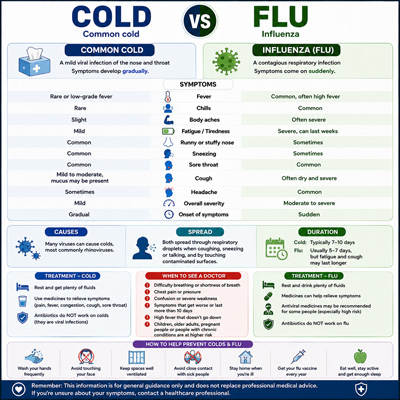
| Symptom or Feature | Common Cold | Flu |
|---|---|---|
| Onset | Usually gradual | Often sudden |
| Fever | Uncommon or mild | Common, but not always present |
| Chills | Less common | Common |
| Body aches | Usually mild | Often more pronounced |
| Fatigue | Usually mild | Can be significant |
| Runny nose | Common | Can occur |
| Sneezing | Common | Sometimes |
| Sore throat | Common | Can occur |
| Cough | Usually mild to moderate | Often dry and more pronounced |
| Headache | Sometimes | Common |
| Overall severity | Usually mild | Often more severe |
Symptoms can vary from person to person, so these differences are not absolute.
How Quickly Do Symptoms Develop?
Common Cold
Cold symptoms often develop gradually.
You may first notice:
- a scratchy throat;
- sneezing;
- a runny or blocked nose;
- coughing;
- mild tiredness.
Flu
Flu symptoms can appear much more quickly.
A person may feel relatively well and then develop several symptoms within a short period, including fever, chills, body aches, headache and significant fatigue.
Which Is More Severe?
The flu is generally more likely than an ordinary cold to cause more significant illness.
However, both infections can affect people differently.
A cold is usually a mild illness, while influenza can sometimes lead to complications, particularly in people at higher risk.
Complications of influenza can include respiratory infections such as pneumonia.
How Long Do Colds and Flu Last?
The duration varies depending on the individual and the infection.
Common Cold
Many people begin to feel better within several days, although some symptoms, particularly coughing or nasal congestion, can last longer.
Flu
Flu symptoms are often most intense during the first few days. Many people recover within about a week, but tiredness and coughing can persist for longer.
If symptoms are severe, worsening or unusually prolonged, seek medical advice.
How Are Colds and Flu Spread?
Both colds and flu can spread through respiratory droplets and particles released when an infected person coughs, sneezes, talks or breathes.
Transmission can also occur when a person touches contaminated surfaces and then touches their mouth, nose or eyes.
To reduce the risk of spreading respiratory infections:
- wash your hands regularly;
- avoid touching your face;
- cover coughs and sneezes;
- improve ventilation;
- avoid close contact with people who are ill;
- stay home when you are unwell when possible.
Cold and Flu Treatment
There is no single treatment that cures every cold or flu infection.
Treatment generally focuses on relieving symptoms and supporting recovery.
Helpful measures may include:
- getting enough rest;
- drinking plenty of fluids;
- eating nutritious foods;
- using appropriate medicines for specific symptoms;
- keeping the room comfortably ventilated.
Antibiotics do not treat viral infections such as ordinary colds or influenza.
Managing a Cold
For a typical cold, treatment is usually focused on symptom relief.
Depending on the symptoms, products may be used to help with:
- nasal congestion;
- sore throat;
- headache;
- fever;
- mild aches;
- cough.
Always follow the instructions for any medicine you use and check whether it is suitable for you.
Managing the Flu
For uncomplicated influenza, rest and fluids are often important parts of supportive care.
Some people may benefit from prescription antiviral treatment, particularly when treatment is started early or when the person has a higher risk of complications.
If you think you may have influenza and you are at increased risk of complications, contact a healthcare professional promptly.
When Should You See a Doctor?
Seek medical advice if symptoms are severe, getting worse or causing concern.
Urgent medical attention may be needed if there is:
- difficulty breathing;
- chest pain or pressure;
- severe weakness or confusion;
- dehydration;
- bluish or grayish lips or skin;
- symptoms that improve and then suddenly become much worse.
Children, older adults, pregnant people and individuals with certain chronic health conditions may have a higher risk of complications and should seek appropriate medical advice when needed.
Can You Prevent Colds and Flu?
You cannot prevent every cold, but several habits can reduce the risk of respiratory infections.
These include:
- washing hands regularly;
- avoiding touching your eyes, nose and mouth;
- maintaining good ventilation;
- avoiding close contact with sick people;
- staying home when you are ill;
- getting adequate sleep;
- maintaining a balanced diet.
Annual influenza vaccination is an important way to reduce the risk of influenza and its complications.
Cold vs Flu: How to Tell the Difference
It is not always possible to distinguish a cold from influenza based on symptoms alone.
A combination of:
- sudden vs gradual onset;
- fever;
- severity of body aches;
- degree of fatigue;
- cough;
- nasal symptoms
can provide clues, but testing may be needed to confirm influenza or another respiratory infection.
Frequently Asked Questions
Is the flu worse than a cold?
Influenza is generally more likely to cause significant symptoms and complications than an ordinary cold, although severity varies between individuals.
Can a cold cause a fever?
Yes, but fever is generally less common or milder with a typical cold. Fever can also occur with influenza.
Is a runny nose more common with a cold?
Yes. Runny or blocked nose and sneezing are particularly common with colds, although they can also occur with influenza.
Can antibiotics cure a cold or flu?
No. Colds and influenza are caused by viruses, while antibiotics are used to treat certain bacterial infections.
Can you have the flu without a fever?
Yes. Not everyone with influenza develops a fever.
How can I know whether I have a cold or flu?
The suddenness and severity of symptoms can provide clues, but symptoms overlap. Testing and professional assessment may sometimes be necessary.
Key Takeaways
- A cold and the flu are both viral respiratory infections, but they are caused by different viruses.
- Colds usually develop gradually and tend to be milder.
- Flu often begins suddenly and can cause stronger fatigue, fever, chills and body aches.
- Runny nose and sneezing are especially common with colds.
- Influenza can sometimes cause serious complications.
- Antibiotics do not treat viral colds or influenza.
- Rest, fluids and appropriate symptom relief can support recovery.
- Flu vaccination is an important preventive measure.
- Seek medical attention for severe, worsening or concerning symptoms.
Explore our Cold, Flu & Respiratory Health section for products and helpful information designed to support you during the cold and flu season.
https://pharmatoo.com/product-category/pharmacy/flu-and-cold/
Tags
- cold vs flu
- common cold
- flu
- influenza
- cold symptoms
- flu symptoms
- cold and flu difference
- cold and flu
- flu vs cold
- respiratory infection
- viral infection
- flu treatment
- cold treatment
- cold remedies
- flu remedies
- cold and flu symptoms
- fever and flu
- cough
- sore throat
- runny nose
- nasal congestion
- body aches
- flu prevention
- cold prevention
- influenza prevention
- flu vaccination
- respiratory health
- cold and flu season
- how to treat a cold
- how to treat the flu
- viral respiratory infection
