


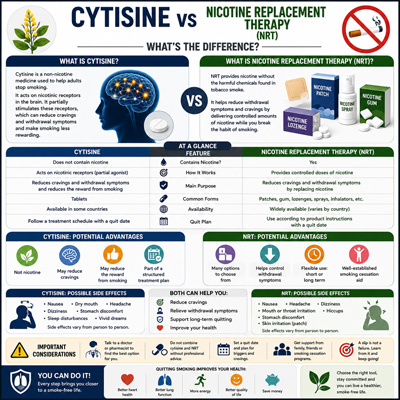
Cytisine vs Nicotine Replacement Therapy: What’s the Difference?
Introduction
Quitting smoking can be challenging because nicotine causes dependence and withdrawal symptoms can make it difficult to stop.
Two approaches that may be used to support smoking cessation are cytisine and nicotine replacement therapy (NRT).
Although both can help manage cravings and withdrawal symptoms, they work in different ways.
This guide explains the main differences between cytisine and NRT, how each approach works, their common forms, advantages and considerations, and how to choose an appropriate option with professional advice.
What Is Cytisine?
Cytisine is a medicine used in some countries to help adults stop smoking.
It acts on certain nicotinic acetylcholine receptors in the brain. These are also affected by nicotine.
Cytisine partially stimulates these receptors, which may help reduce nicotine withdrawal symptoms and cravings while also reducing the rewarding effects of smoking.
Cytisine is not nicotine.
The availability and approved use of cytisine can vary between countries.
What Is Nicotine Replacement Therapy?
Nicotine replacement therapy provides nicotine without the harmful substances produced by burning tobacco.
NRT is available in several forms, including:
- nicotine patches;
- nicotine gum;
- nicotine lozenges;
- nicotine sprays;
- other nicotine-containing products, depending on the country.
The purpose of NRT is to provide a controlled source of nicotine while a person stops using tobacco.
This can help reduce cravings and withdrawal symptoms during the quitting process.
How Does Cytisine Work?
Cytisine interacts with nicotine receptors in the brain.
It acts as a partial agonist, meaning that it activates certain receptors but generally produces a weaker effect than nicotine.
This may help in two ways:
- reducing nicotine withdrawal symptoms;
- making smoking less rewarding.
As a result, cytisine can help some people transition away from nicotine dependence.
How Does NRT Work?
NRT supplies nicotine to the body in controlled amounts.
Unlike cigarettes, NRT does not involve burning tobacco and therefore avoids exposure to the many harmful chemicals produced by tobacco smoke.
Different NRT products provide nicotine in different ways.
For example:
- patches provide a longer-lasting, steady supply;
- gum can be used when cravings occur;
- lozenges dissolve in the mouth and provide nicotine;
- sprays can deliver nicotine relatively quickly.
The appropriate product depends on individual needs and the specific product instructions.
Cytisine vs NRT: Main Difference
The biggest difference is how they provide their effect.
| Feature | Cytisine | Nicotine Replacement Therapy |
|---|---|---|
| Contains nicotine | No | Yes |
| Main action | Acts on nicotine receptors | Provides nicotine |
| Main purpose | Reduce cravings and withdrawal while reducing the rewarding effects of smoking | Reduce cravings and withdrawal by replacing nicotine |
| Common forms | Tablets | Patches, gum, lozenges, sprays and others |
| Requires a planned quit strategy | Yes | Yes |
| Available everywhere | No | Availability varies by country |
| Professional advice | Recommended when appropriate | Recommended when appropriate |
Cytisine Does Not Provide Nicotine
One important distinction is that cytisine is not a nicotine product.
Instead, cytisine interacts with some of the same receptors that nicotine activates.
This means a person taking cytisine can receive receptor stimulation without obtaining nicotine from cigarettes or nicotine-containing products.
NRT Provides Controlled Nicotine
NRT takes a different approach.
Instead of immediately eliminating nicotine exposure, it provides nicotine in a controlled form while the person stops using tobacco.
The dose can then be reduced according to the treatment plan.
This approach may make withdrawal symptoms more manageable for people who find it difficult to stop nicotine abruptly.
Which One Is More Effective?
There is no single option that is best for every person.
The effectiveness of cytisine and NRT can depend on factors such as:
- level of nicotine dependence;
- smoking habits;
- previous quit attempts;
- treatment adherence;
- use of behavioral support;
- individual health circumstances;
- the specific product and treatment regimen.
Both approaches can be useful tools for smoking cessation.
A healthcare professional can help determine which option is most appropriate.
Cytisine: Potential Advantages
Cytisine may offer several potential advantages for some people.
It Does Not Contain Nicotine
Cytisine itself is not nicotine.
It Can Reduce Cravings
By interacting with nicotine receptors, cytisine may help reduce the desire to smoke.
It May Reduce the Reward From Smoking
Cytisine can partially activate nicotine receptors and may make smoking less rewarding.
It Can Be Part of a Structured Quit Plan
Cytisine is generally used according to a defined treatment schedule alongside a planned smoking-cessation strategy.
NRT: Potential Advantages
NRT also offers several potential benefits.
Different Forms Are Available
People can choose from different types of products depending on availability and individual needs.
It Can Help Control Withdrawal
NRT provides nicotine without tobacco smoke and can help reduce withdrawal symptoms.
Flexible Options
Some forms, such as gum or lozenges, can be used to respond to cravings, while patches provide longer-lasting nicotine delivery.
Longstanding Smoking-Cessation Approach
NRT has been used for many years as a method of supporting people who want to stop smoking.
Possible Side Effects of Cytisine
Like other medicines, cytisine may cause side effects.
Depending on the specific product, possible side effects may include:
- nausea;
- dry mouth;
- headache;
- dizziness;
- gastrointestinal discomfort;
- sleep disturbances;
- unusual or vivid dreams.
Always read the patient information leaflet for the specific product you are using.
If symptoms are severe or concerning, contact a healthcare professional.
Possible Side Effects of NRT
NRT can also cause side effects, which may depend on the form being used.
Possible effects can include:
- nausea;
- headache;
- dizziness;
- mouth or throat irritation;
- hiccups;
- digestive discomfort.
Nicotine patches may sometimes cause skin irritation where the patch is applied.
Follow the instructions for your specific product and speak with a healthcare professional if you experience concerning symptoms.
Who Should Consider Professional Advice?
Before choosing a smoking-cessation medicine, speak with a doctor or pharmacist if you:
- have cardiovascular or other significant medical conditions;
- take prescription medicines;
- are pregnant or breastfeeding;
- have previously experienced side effects from smoking-cessation treatment;
- are unsure which treatment is appropriate;
- want to combine different smoking-cessation products.
Individual circumstances can affect which treatment is suitable.
Can Cytisine and NRT Be Used Together?
Do not automatically combine cytisine with nicotine replacement therapy.
Both approaches affect nicotine-related pathways, and combination treatment should only be considered when appropriate for the individual and supported by professional advice.
Before combining cytisine with nicotine patches, gum, lozenges, sprays or other nicotine-containing products, consult a doctor or pharmacist.
The Importance of a Quit Date
Regardless of the treatment approach, having a clear plan can be helpful.
Before your quit date:
- remove cigarettes from your home;
- throw away lighters and ashtrays;
- identify your smoking triggers;
- tell supportive people about your plan;
- prepare alternatives for dealing with cravings.
A structured plan can make the transition to a smoke-free lifestyle easier.
Managing Cravings With Either Approach
Medication is only one part of quitting.
When a craving appears, try:
Delay
Wait several minutes before acting on the urge.
Drink Water
Slowly drink a glass of water.
Change Your Environment
Move away from places associated with smoking.
Stay Busy
Use a hobby, walk, music or another activity as a distraction.
Practice Slow Breathing
Take several slow, controlled breaths.
These strategies can be useful whether you are using cytisine, NRT or another smoking-cessation approach.
Behavioral Support Matters
Medication can help with the physical aspects of nicotine dependence, but smoking is also connected to habits and routines.
Behavioral support can help you:
- identify triggers;
- change daily routines;
- develop alternatives to smoking;
- manage stress;
- prevent relapse;
- stay motivated.
Combining treatment with appropriate behavioral support may improve the overall quitting process.
What If You Have a Slip?
A cigarette after your quit date does not necessarily mean that your entire attempt has failed.
If you have a slip:
- Stop smoking again as soon as possible.
- Identify what triggered the cigarette.
- Review your quit plan.
- Avoid the trigger when possible.
- Continue with your treatment plan as instructed.
- Ask for professional support if you are struggling.
A setback can provide useful information about situations that need additional preparation.
Frequently Asked Questions
Is cytisine the same as nicotine?
No. Cytisine and nicotine are different substances. Cytisine acts on some of the same receptors as nicotine but does not contain nicotine.
Does NRT contain nicotine?
Yes. NRT provides controlled amounts of nicotine through products such as patches, gum, lozenges and sprays.
Which is better: cytisine or NRT?
There is no universal answer. The appropriate option depends on individual circumstances, nicotine dependence, previous quit attempts, health factors and treatment preferences.
Does cytisine reduce nicotine cravings?
Cytisine may reduce cravings and withdrawal symptoms by partially stimulating certain nicotine receptors.
Does NRT stop nicotine withdrawal?
NRT can reduce nicotine withdrawal symptoms by providing controlled amounts of nicotine while a person stops using tobacco.
Can I use cytisine and nicotine patches together?
Do not combine them without professional advice. Ask a doctor or pharmacist whether combination treatment is appropriate for your circumstances.
Can I smoke while using NRT?
The goal of NRT is to help you stop smoking. Follow the instructions for your specific product and seek professional advice if you are having difficulty following your quit plan.
How long should I use NRT?
The duration depends on the specific product, treatment plan and individual circumstances. Follow the product instructions or advice from a healthcare professional.
Is cytisine available everywhere?
No. Availability and approved indications vary between countries.
Key Takeaways
- Cytisine and NRT are different approaches to smoking cessation.
- Cytisine is not nicotine and works by interacting with certain nicotine receptors.
- NRT provides controlled amounts of nicotine without tobacco smoke.
- Both approaches can help reduce cravings and withdrawal symptoms.
- Cytisine may also reduce the rewarding effects of smoking.
- NRT is available in several forms, including patches, gum, lozenges and sprays.
- Neither option replaces the importance of a quit plan and behavioral support.
- Do not combine cytisine and NRT without appropriate professional advice.
- A doctor or pharmacist can help you choose a suitable treatment.
- Staying committed to a structured quit plan can help you move toward a smoke-free lifestyle.
Explore our Smoking Cessation and Health & Wellness collection for products and resources that can support your journey toward a smoke-free life.
https://pharmatoo.com/product-category/pharmacy/anti-smoking/
Tags
- cytisine vs nicotine replacement therapy
- cytisine
- nicotine replacement therapy
- NRT
- cytisine for smoking cessation
- nicotine replacement
- quit smoking
- stop smoking
- smoking cessation
- smoking cessation treatment
- nicotine dependence
- nicotine addiction
- nicotine withdrawal
- nicotine cravings
- cytisine treatment
- nicotine patches
- nicotine gum
- nicotine lozenges
- nicotine spray
- quit smoking medication
- smoking cessation medicine
- tobacco cessation
- quit smoking plan
- smoking cessation support
