


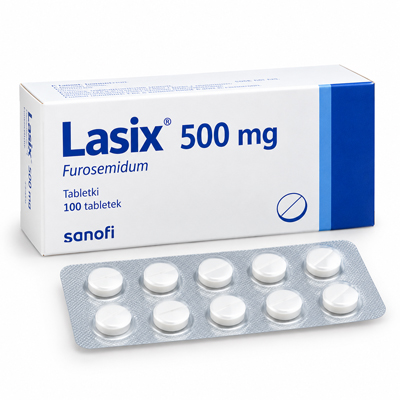
LASIX 500 mg, 100 tablets
Lasix 500 mg is a high-dose diuretic medicine containing furosemide, used in selected cases to increase urine production and help the body remove excess fluid. It may be prescribed for certain patients with fluid retention associated with kidney disease, under specialist supervision.
The 500 mg strength is a specialized formulation and is not interchangeable with the more common lower-dose Lasix tablets. It should only be used according to a doctor’s prescription and the official product leaflet.
What Is Lasix 500 mg Used For?
Lasix helps the kidneys eliminate excess salt and water through urine. Depending on the approved product information and the patient’s condition, it may be used in the management of:
-
Severe fluid retention associated with certain kidney disorders.
-
Oedema when a specialist determines that high-dose furosemide is appropriate.
-
Selected cases requiring intensive diuretic treatment and close monitoring.
The exact indication depends on the country’s approved labeling and the patient’s medical condition.
Active Ingredient
– Furosemide — 500 mg per tablet.
How Does Lasix Work?
Furosemide is a loop diuretic. It acts on the kidneys to increase the excretion of sodium, chloride, and water through urine. This helps reduce excess fluid accumulation and swelling.
The 500 mg formulation is a high-dose product intended for selected clinical situations and requires careful medical supervision.
How to Take Lasix 500 mg
-
Take the medicine only as prescribed by a specialist.
-
The dose and timing depend on the diagnosis, kidney function, previous response to diuretics, and laboratory results.
-
Do not increase the dose or take extra tablets if swelling persists.
-
Your doctor may monitor blood pressure, kidney function, body weight, and electrolyte levels, particularly potassium and sodium.
-
Do not stop or change treatment without consulting your healthcare professional.
Important: Lasix 500 mg is not interchangeable with ordinary low-dose furosemide tablets on a tablet-for-tablet basis.
Possible Side Effects
Possible side effects include:
-
Increased urination.
-
Dehydration and excessive thirst.
-
Low blood pressure and dizziness.
-
Low potassium or sodium levels.
-
Muscle cramps or weakness.
-
Changes in kidney function.
-
Increased uric acid levels.
Seek urgent medical attention for fainting, severe weakness, confusion, markedly reduced urine output, irregular heartbeat, or sudden hearing changes.
Warnings and Precautions
-
Do not use Lasix if you have anuria (failure to produce urine) or a known allergy to furosemide, unless a specialist determines an appropriate alternative.
-
Tell your doctor if you have kidney or liver disease, diabetes, gout, low blood pressure, or electrolyte disturbances.
-
Inform your healthcare professional about all other medicines, especially blood pressure medicines, lithium, and anti-inflammatory painkillers such as ibuprofen.
-
Avoid dehydration. Your doctor should advise you about fluid intake and any dietary restrictions.
-
Pregnancy and breastfeeding require an individual medical assessment.
High-dose furosemide can cause serious fluid and electrolyte depletion if used incorrectly.
Storage
Store the tablets according to the instructions on the specific package leaflet. Keep them in their original, tightly closed packaging, away from excessive heat, moisture, and direct light. Keep out of reach of children.
Frequently Asked Questions
What is Lasix 500 mg used for?
It is a high-dose formulation of furosemide used in selected cases requiring intensive diuretic treatment, particularly certain kidney-related conditions. The exact approved indication depends on the product leaflet and country.
Is Lasix 500 mg a high dose?
Yes. It is substantially stronger per tablet than common 20 mg, 40 mg, or 80 mg formulations and should only be used under specialist supervision.
Can Lasix 500 mg be taken for ordinary swelling?
Do not self-treat swelling with this strength. Swelling can have several causes, and an appropriate dose must be determined by a healthcare professional.
Does Lasix cause frequent urination?
Yes. Increasing urine production is its intended effect. Excessive urination, dizziness, or weakness may indicate dehydration or electrolyte imbalance and should be discussed with a doctor.
Lasix 500 mg contains furosemide, a potent loop diuretic used in selected cases requiring high-dose treatment. Because it can cause dehydration, electrolyte disturbances, low blood pressure, and changes in kidney function, it must be taken only under specialist supervision with appropriate monitoring.
https://pharmatoo.com/product-category/pharmacy/urinary-system/
Tags
-
Lasix 500 mg
-
Lasix Special
-
furosemide 500 mg
-
фуросемид
-
loop diuretic
-
high-dose diuretic
-
fluid retention
-
oedema treatment
-
kidney-related oedema
-
prescription medicine
-
diuretic safety
